● High-performance material · CSMC

CSMC: compression-moulded carbon fibre parts

For structural parts made today in aluminium or steel that need to weigh less. CSMC combines carbon fibre with the productivity of compression moulding: complex geometries, ribs and bosses in a single operation, and repeatable series.

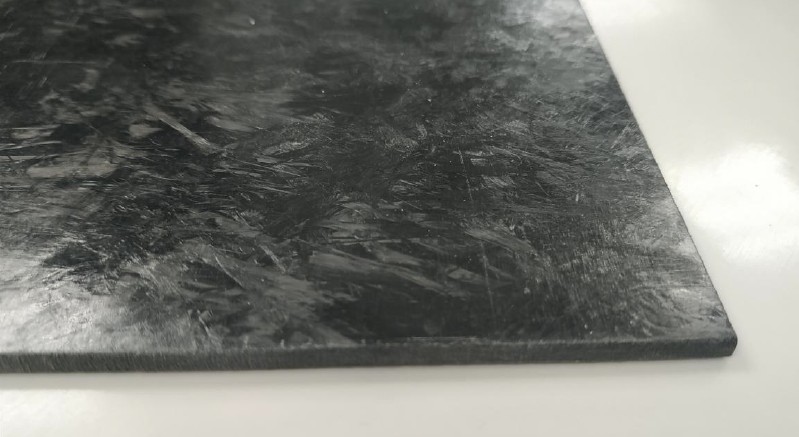
Carbon fibre CSMC material
1.51 g/cm³
density: 44% lower than aluminium
≥ 370 MPa
tensile strength
≥ 41.5 GPa
tensile modulus
+113%
specific strength vs. 6061-T6 aluminium
3D explorer · Aviation and UAV

Take an aircraft section apart and see which material goes into each part

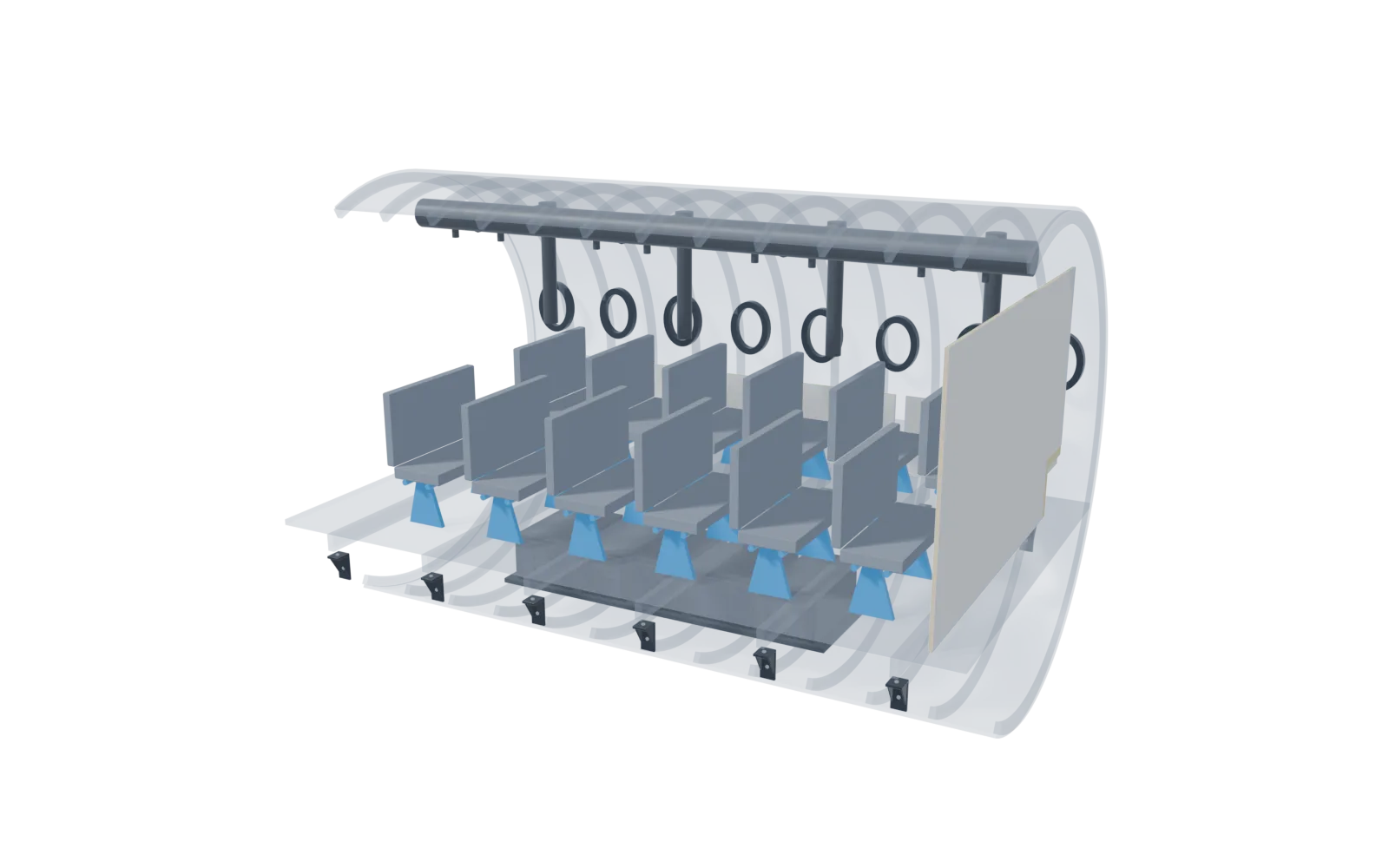
Generic fuselage section and wing root, with translucent structure. Click a part to zoom in and see its engineering sheet.

Render of a generic fuselage section with fittings, window frames, ducts, partition panels, seats and avionics boxes

Drag to rotate · scroll or pinch to zoom · click a part to zoom in

01

Structural fittings (brackets)

Location
Frame-to-floor joints and wing-root fitting.
Recommended material
CSMC Carbon 57%
Requirement / key data
1.51 g/cm³ · tensile 370 MPa · modulus 41.5 GPa
1Part detail and process
Angle brackets with gussets, 3D ribs and metal bushings in the holes, instead of hog-out machined aluminium where much of the billet ends up as chips. Typical thickness of 2.5 to 6 mm for moulded parts. 5-axis waterjet trimming (0°–64°) and in-house CNC machining. Finish: technical visible face with controlled roughness in bonding areas.
2Assembly and fixing to the structure
  • Metal torque-limiting bushings in through holes, so tightening does not cause composite creep under vibration.
  • Galvanic couple insulation (insulating washers and gaskets) where the carbon part is fixed onto aluminium.
  • M5–M12 threaded metal inserts, moulded in or installed cold or hot into reinforced bosses.
3Lightweighting: ribbed monolithic or sandwich
Proposed solution: ribbed monolithic. Thin wall with 3D ribs, bosses and inserts where the loads arrive — right for compact parts or point loads. For large spans, a sandwich panel is assessed.
4Advantages over the traditional alternative
Compared with machined or cast aluminium — CSMC Carbon 57%: 1.51 g/cm³ vs 2.70 for aluminium (−44% at equal volume), tensile 370 MPa, modulus 41.5 GPa and +113% specific strength (245 vs 115 MPa·cm³/g).
5Series and manufacturing capacity
Typical series (indicative): 50 to 500 pcs/year, typical of rail, aerospace or space programmes. Press: P4 or P20 (1,500 and 2,500 kN, 450 × 900 and 800 × 800 mm platens). In-house fleet of 7 presses from 150 to 1,250 t, with a largest platen of 3,500 × 1,800 mm. The steel mould is amortised over the series: the higher the volume, the lower the tooling cost per part; for short runs we compare with other solutions.
Request a study of this part →
02

Structural window frames

Location
Frames in the fuselage side wall.
Recommended material
CSMC Carbon 57%
Requirement / key data
Modulus 41.5 GPa · 1.51 g/cm³
1Part detail and process
Elliptical frame with reveal moulded in a single operation, with no contour machining. Typical thickness of 2.5 to 6 mm for moulded parts. 5-axis waterjet trimming (0°–64°) and in-house CNC machining. Finish: technical visible face with controlled roughness in bonding areas.
2Assembly and fixing to the structure
  • M5–M12 threaded metal inserts, moulded in or installed cold or hot into reinforced bosses.
  • Galvanic couple insulation (insulating washers and gaskets) where the carbon part is fixed onto aluminium.
3Lightweighting: ribbed monolithic or sandwich
Proposed solution: ribbed monolithic. Thin wall with 3D ribs, bosses and inserts where the loads arrive — right for compact parts or point loads. For large spans, a sandwich panel is assessed.
4Advantages over the traditional alternative
Compared with machined or cast aluminium — CSMC Carbon 57%: 1.51 g/cm³ vs 2.70 for aluminium (−44% at equal volume), tensile 370 MPa, modulus 41.5 GPa and +113% specific strength (245 vs 115 MPa·cm³/g).
5Series and manufacturing capacity
Typical series (indicative): 50 to 500 pcs/year, typical of rail, aerospace or space programmes. Press: P4 or P20 (1,500 and 2,500 kN, 450 × 900 and 800 × 800 mm platens). In-house fleet of 7 presses from 150 to 1,250 t, with a largest platen of 3,500 × 1,800 mm. The steel mould is amortised over the series: the higher the volume, the lower the tooling cost per part; for short runs we compare with other solutions.
Request a study of this part →
03

Cabin air ducts

Location
Overhead manifold, risers and outlets.
Recommended material
Structural Phenolic SMC 55% GF
Requirement / key data
UL 94 V-0 @ 1.2 mm · LOI > 100%
1Part detail and process
3D ducts with no intermediate joints, with bends and outlets integrated in the part. Typical thickness of 2.5 to 6 mm for moulded parts. 5-axis waterjet trimming (0°–64°) and in-house CNC machining. Finish: technical visible face in the material colour.
2Assembly and fixing to the structure
  • M5–M12 threaded metal inserts, moulded in or installed cold or hot into reinforced bosses.
  • Perimeter lip or channel for a sealing elastomer gasket.
3Lightweighting: ribbed monolithic or sandwich
Proposed solution: ribbed monolithic. Thin wall with 3D ribs, bosses and inserts where the loads arrive — right for compact parts or point loads. For large spans, a sandwich panel is assessed.
4Advantages over the traditional alternative
Compared with flat panels assembled with profiles — Structural Phenolic SMC 55% GF: 1.84 g/cm³, flexural 350 MPa, Charpy 120 kJ/m², UL 94 V-0 at 1.2 mm, LOI > 100% and 0.00% moulding shrinkage (indicative datasheet values). A single 3D part with no bolted joints.
5Series and manufacturing capacity
Typical series (indicative): 50 to 500 pcs/year, typical of rail, aerospace or space programmes. Press: P22 or P20 (4,000 and 2,500 kN, 1,000 × 1,000 and 800 × 800 mm platens). In-house fleet of 7 presses from 150 to 1,250 t, with a largest platen of 3,500 × 1,800 mm. The steel mould is amortised over the series: the higher the volume, the lower the tooling cost per part; for short runs we compare with other solutions.
Request a study of this part →
04

Partition panels and linings

Location
Cabin partition and side linings.
Recommended material
Structural Phenolic SMC 55% GF
Requirement / key data
UL 94 V-0 @ 1.2 mm · LOI > 100% in the skins
1Part detail and process
Sandwich panels with a lightweight core (layers visible at the sectioned corner) and integrated fixings. Typical thickness of 2.5 to 6 mm for moulded parts. 5-axis waterjet trimming (0°–64°) and in-house CNC machining. Finish: technical visible face in the material colour.
2Assembly and fixing to the structure
  • M5–M12 threaded metal inserts, moulded in or installed cold or hot into reinforced bosses.
  • Perimeter overlap flanges to fit the adjacent parts.
3Lightweighting: ribbed monolithic or sandwich
Proposed solution: sandwich panel. Moulded skins with a lightweight self-extinguishing core, selected for the fire requirement, multiply flexural stiffness over large spans compared with a monolithic panel of the same weight; the actual weight saving is quantified in each part study. Compact parts are solved as ribbed monolithic.
4Advantages over the traditional alternative
Compared with flat panels assembled with profiles — Structural Phenolic SMC 55% GF: 1.84 g/cm³, flexural 350 MPa, Charpy 120 kJ/m², UL 94 V-0 at 1.2 mm, LOI > 100% and 0.00% moulding shrinkage (indicative datasheet values). A single 3D part with no bolted joints.
5Series and manufacturing capacity
Typical series (indicative): 50 to 500 pcs/year, typical of rail, aerospace or space programmes. Press: P10 (1,250 t, 3,500 × 1,800 mm platen) or P8 (10,000 kN, 2,800 × 1,800 mm). In-house fleet of 7 presses from 150 to 1,250 t, with a largest platen of 3,500 × 1,800 mm. The steel mould is amortised over the series: the higher the volume, the lower the tooling cost per part; for short runs we compare with other solutions.
Request a study of this part →
05

Seat load-bearing structure

Location
Legs, beams and track fittings.
Recommended material
CSMC Carbon 57%
Requirement / key data
1.51 g/cm³ · tensile 370 MPa
1Part detail and process
Lightweight legs and beams with track fittings and metal bushings at the joints. Typical thickness of 2.5 to 6 mm for moulded parts. 5-axis waterjet trimming (0°–64°) and in-house CNC machining. Finish: technical visible face with controlled roughness in bonding areas.
2Assembly and fixing to the structure
  • Metal torque-limiting bushings in through holes, so tightening does not cause composite creep under vibration.
  • M5–M12 threaded metal inserts, moulded in or installed cold or hot into reinforced bosses.
3Lightweighting: ribbed monolithic or sandwich
Proposed solution: ribbed monolithic. Thin wall with 3D ribs, bosses and inserts where the loads arrive — right for compact parts or point loads. For large spans, a sandwich panel is assessed.
4Advantages over the traditional alternative
Compared with machined or cast aluminium — CSMC Carbon 57%: 1.51 g/cm³ vs 2.70 for aluminium (−44% at equal volume), tensile 370 MPa, modulus 41.5 GPa and +113% specific strength (245 vs 115 MPa·cm³/g).
5Series and manufacturing capacity
Typical series (indicative): 50 to 500 pcs/year, typical of rail, aerospace or space programmes. Press: P22 or P20 (4,000 and 2,500 kN, 1,000 × 1,000 and 800 × 800 mm platens). In-house fleet of 7 presses from 150 to 1,250 t, with a largest platen of 3,500 × 1,800 mm. The steel mould is amortised over the series: the higher the volume, the lower the tooling cost per part; for short runs we compare with other solutions.
Request a study of this part →
06

Avionics boxes and covers

Location
Equipment bay under the floor.
Recommended material
Structural Phenolic SMC 55% GF · CSMC Carbon 57%
Requirement / key data
Shrinkage 0.00% · UL 94 V-0 @ 1.2 mm
1Part detail and process
Boxes with ribbed lid, grille and precision threaded inserts; 0.00% shrinkage helps hold mounting dimensions. Typical thickness of 2.5 to 6 mm for moulded parts. 5-axis waterjet trimming (0°–64°) and in-house CNC machining. Finish: technical visible face in the material colour.
2Assembly and fixing to the structure
  • M5–M12 threaded metal inserts, moulded in or installed cold or hot into reinforced bosses.
  • Perimeter lip or channel for a sealing elastomer gasket.
3Lightweighting: ribbed monolithic or sandwich
Proposed solution: ribbed monolithic. Thin wall with 3D ribs, bosses and inserts where the loads arrive — right for compact parts or point loads. For large spans, a sandwich panel is assessed.
4Advantages over the traditional alternative
Compared with machined or cast aluminium — Structural Phenolic SMC 55% GF: 1.84 g/cm³, flexural 350 MPa, Charpy 120 kJ/m², UL 94 V-0 at 1.2 mm, LOI > 100% and 0.00% moulding shrinkage (indicative datasheet values). A single 3D part with no bolted joints.
5Series and manufacturing capacity
Typical series (indicative): 50 to 500 pcs/year, typical of rail, aerospace or space programmes. Press: P4 or P20 (1,500 and 2,500 kN, 450 × 900 and 800 × 800 mm platens). In-house fleet of 7 presses from 150 to 1,250 t, with a largest platen of 3,500 × 1,800 mm. The steel mould is amortised over the series: the higher the volume, the lower the tooling cost per part; for short runs we compare with other solutions.
Request a study of this part →

Generic, illustrative model: it does not represent any real aircraft. We manufacture under ISO 9001:2015 and ISO 14001:2015 with high-performance materials; we hold no EN 9100 certification and no in-house FAR 25.853 tests. Programme qualification tests (fire, smoke and toxicity, vibration, etc.) are defined and validated with the customer’s engineering team.

Why CSMC

More strength per kilo, at the pace of a moulded part.

01

Real weight reduction

At 1.51 g/cm³ versus 2.70 g/cm³ for aluminium, CSMC delivers more than twice the tensile strength per unit of weight. Less mass in the vehicle or equipment, and easier assembly and handling.

02

Engineering-grade stiffness

Tensile modulus ≥ 41,500 MPa and flexural strength ≥ 420 MPa. Its specific stiffness (modulus/density) is even slightly higher than that of 6061-T6 aluminium.

03

Complex shapes in one part

Compression moulding integrates ribs, reinforcements and bosses into the part itself, reducing joints and operations compared with a machined or welded solution.

04

No corrosion

As a thermoset composite it does not rust and needs no anti-corrosion treatment. Where it touches aluminium directly, we isolate the joint at design stage to prevent galvanic corrosion.

05

From mould to finished part

Moulding, CNC machining and 5-axis waterjet cutting in the same plant, with unit traceability of batch, press and part.

06

Engineering from day one

We review your aluminium design and propose thicknesses and ribs for CSMC with our CAD/CAM team (SolidWorks, CamWorks) and 3D printing for prototypes.

Lightweighting calculator

How much would your metal part weigh in composite?

Enter the current material and weight of the part and the series volume. We give you a first estimate of the weight in CSMC or structural SMC and of the mass saved per year.

1.0 = same volume as the current part. Increase it if the composite will need more thickness or ribs to match stiffness.

Estimate at equal volume, corrected by the thickness factor. The real saving is confirmed in the engineering study (thicknesses, ribs, joints, stiffness and fire requirements). Composites: material manufacturer’s datasheets; metals: typical reference values.

Request a lightweighting study with these data →
Substitution engineering

Material substitution: same function, better part

Three material changes we solve with compression moulding, with the datasheet values of each grade.

01

Mica → 3D Structural Phenolic SMC

Battery pack shields (electric vehicles, rail), fire barriers and arc chutes.

TodayFlat mica sheets cut and joined with fasteners or adhesives: every joint is a path for hot gases or an arc, the material is brittle under vibration and impact, and assembly adds cost.

With compression mouldingA single three-dimensional part with ribs, sealing labyrinths and integrated fixings. The phenolic matrix tends to char rather than melt or drip.

  • Shrinkage 0.00% (ISO 2577)
  • Charpy 120 kJ/m² (ISO 179)
  • Flexural 350 MPa (ISO 14125)
  • UL 94 V-0 at 1.2 mm
  • LOI > 100% (ISO 4589-2)
Assess my part →
02

Machined or cast aluminium → CSMC Carbon 57%

Brackets, frames, covers and structural parts currently milled from 6061-T6 billet or cast.

TodayAluminium part with many hours of CNC milling or casting tooling, at 2.70 g/cm³.

With compression mouldingRibs and bosses integrated in a single press cycle, with fewer machining operations and more strength per kilo.

  • 1.51 g/cm³ (−44% vs aluminium)
  • Tensile ≥ 370 MPa
  • +113% specific strength
  • 245 vs 115 MPa·cm³/g
Assess my part →
03

Stainless steel or welded sheet → Electrical and Structural SMC

Outdoor or electrically insulating enclosures, cabinets, covers and housings.

TodaySheet metal cut, bent, welded and painted, needing corrosion protection and added insulation.

With compression mouldingRibbed shapes moulded with no welds or bends, corrosion-free with no anti-corrosion coatings, and inherently insulating.

  • 16 kV/mm
  • CTI 600
  • Glow wire 960 °C
  • HDT > 250 °C
  • UL 94 V-0
Assess my part →

Values from the material manufacturer’s datasheet (indicative values for the Structural Phenolic SMC). Documentation available on request. Final part behaviour (fire, arc, sealing, IP/IK) depends on the design and is validated with the tests each project requires.

Technical data

CSMC vs. structural phenolic SMC and aluminium

Property CSMC Carbon 57% Structural Phenolic SMC 55% GF 6061-T6 aluminium
Density (g/cm³) 1.51 1.84 2.70
Tensile strength (MPa) ≥ 370 200 310
Tensile modulus (GPa) ≥ 41.5 17 68.9
Flexural strength (MPa) ≥ 420 350 —
Specific tensile strength (MPa·cm³/g) 245 109 115
Specific flexural strength (MPa·cm³/g) 278 190 —
Fire (UL 94) — V-0 @ 1.2 mm · LOI > 100% —
Reinforcement 57% carbon fibre 55% glass fibre —

Values from the material manufacturer’s datasheet (tests ISO 527-4, ISO 14125, EN ISO 1183-1, UL 94, ISO 4589-2; indicative values for the phenolic SMC). Documentation available on request. 6061-T6 aluminium: typical values published by ASM / MatWeb. Indicative comparison: actual weight saving depends on each part’s geometry and design criterion (strength or stiffness).
Applications

Where CSMC adds most value

  • Structural components and brackets for railway rolling stock.
  • Structural and semi-structural parts for automotive and commercial vehicles.
  • Frames, covers and housings for equipment where weight penalises installation or transport.
  • Replacement of machined aluminium or welded sheet-metal parts in medium and long series.
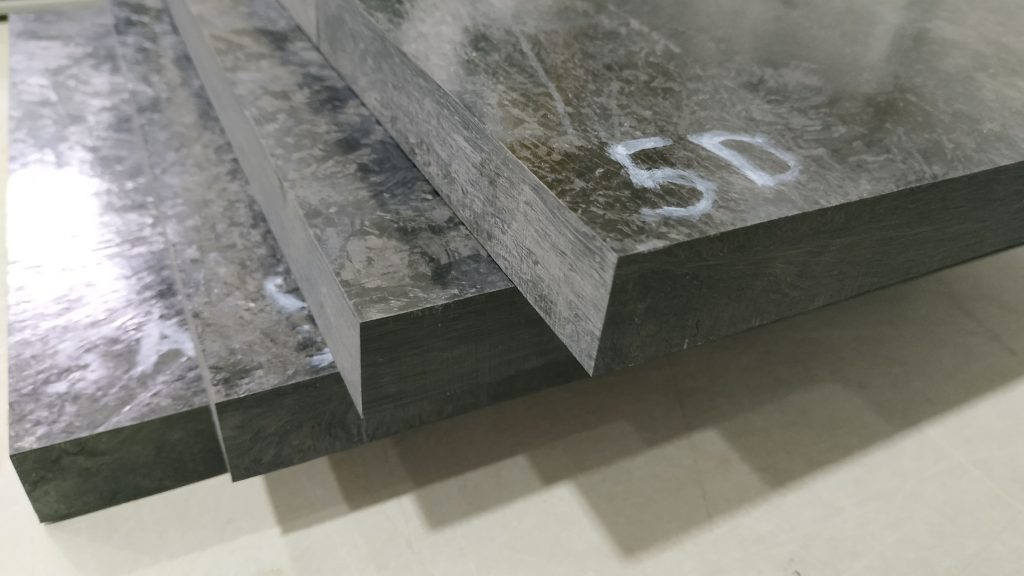
Railway part moulded in CSMC
Industrial capacity

From mould to finished part, in a single plant.

7
compression presses, from 150 to 1,250 t
3.500 × 1.800
mm platen on our largest press
24 Tn
moulds up to 24 tonnes, with a dedicated mould store
CNC + 5 ejes
4 CNC centres and 2 in-house waterjet cutting machines
PIMC
in-mould painting for a Class A finish
ISO 9001 · 14001
quality and environment, unit traceability batch–press–part
Frequently asked questions

Common questions about CSMC

When does CSMC pay off against aluminium?

When weight is a design criterion and the part has a complex geometry or is made in series: compression moulding avoids machining and joints, and the material offers more strength per kilo. For very simple parts or very short runs we assess it case by case, with figures.

What do you need to assess a part in CSMC?

The drawing or 3D model (STEP), mechanical requirements or loads, expected annual volume and applicable standards. With that we confirm initial feasibility within 24 working hours and propose thicknesses and ribs.

Can you work with my mould?

Yes. We work with our own and customer moulds, with a dedicated mould store for tools up to 24 t and their maintenance.

Does CSMC meet fire standards?

The CSMC datasheet covers mechanical properties. If your application requires EN 45545-2 or another fire standard, we review it for that specific project before proposing the material.

Have an aluminium part that could weigh less?

Send us the drawing or 3D model and the annual volume: we reply with initial feasibility within 24 working hours.