● Compression moulding · SMC · CSMC · Phenolic

Advanced engineering
in compression molding

We transform thermoset resins into high-precision structural components for the most demanding sectors: rail, automotive, energy and technical construction.

25+
Years of experience
1.250Tn
Largest press
HL3
Phenolic SMC · EN 45545 fire
5.500m²
Industrial floor area
7
Prensas de compresión
35mm
Max. sheet thickness
4000×2000
Water jet cutting (mm)
±64°
Head tilt
24Tn
Mold capacity
High-performance materials

Lighter than aluminium. Safer in a fire.

Two high-value materials for demanding projects, processed with the same industrial capacity as our SMC series.

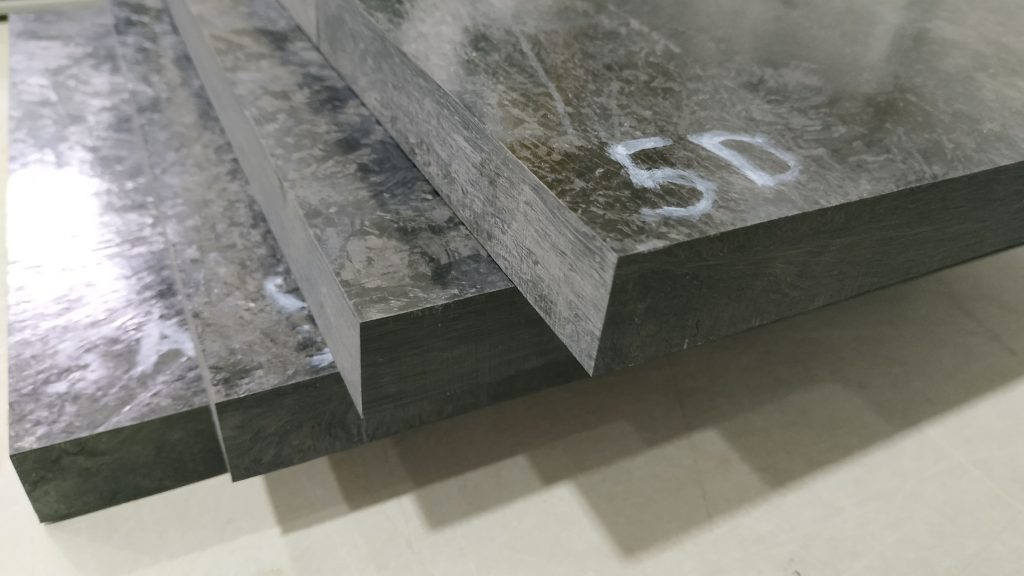
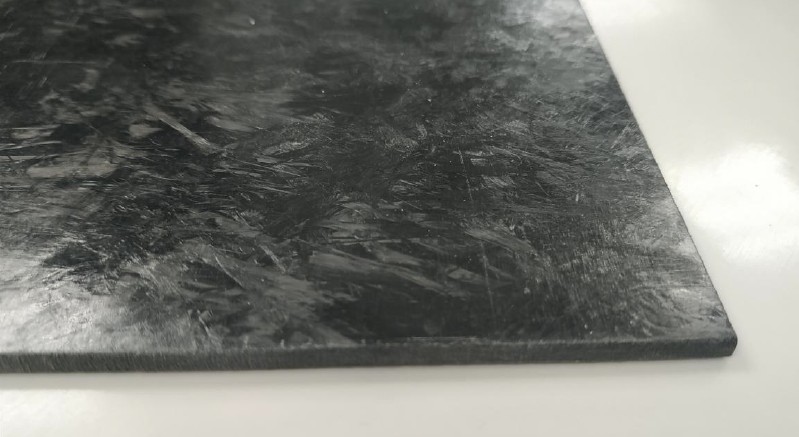
Carbon fibre CSMC material
CSMC · Carbon fibre

Structural parts lighter than in aluminium

1,51g/cm³ density
≥ 370MPa tensile strength
+113%specific strength vs. 6061-T6 aluminium

Carbon fibre with the productivity of compression moulding: ribs and bosses in a single part, no corrosion, and repeatable series.
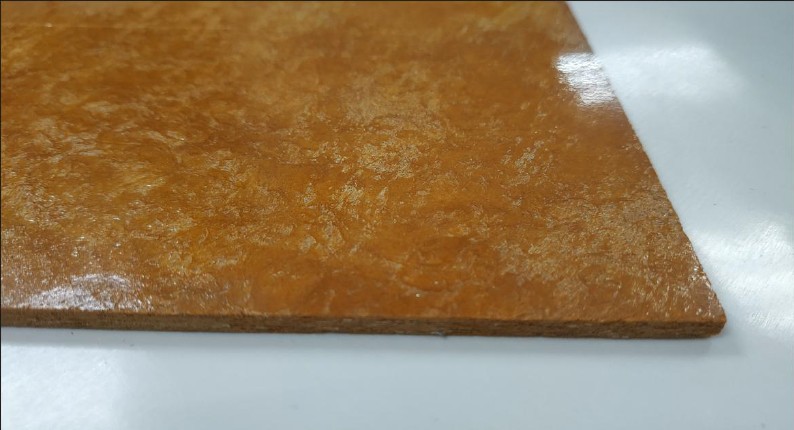
Fire-retardant phenolic SMC material
Phenolic SMC · EN 45545-2

Railway interiors with the highest fire requirements

HL3EN 45545-2, certified configuration
3Dshaped parts, not just panels
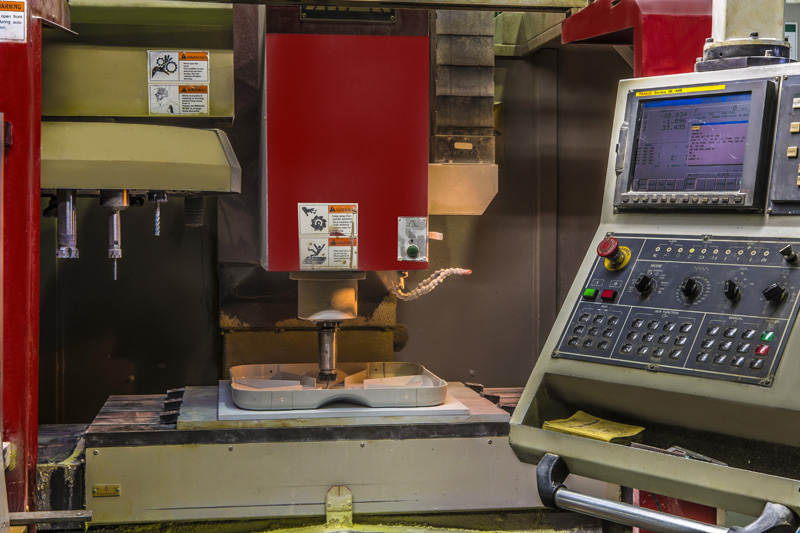
5 axiswaterjet cutting and CNC in-house

Fire behaviour comes from the phenolic resin itself: it chars instead of dripping and produces little smoke.

Railway volumes? We also work with flame-retardant polyester SMC classified to EN 45545-2 for R1, R2, R3, R6, R7 and R17 up to HL3. See EN 45545-2 materials →

View all materials →

New · Material substitution

Mica, aluminium or welded sheet metal: what if the part is moulded?

Mica → 3D phenolic SMC, machined aluminium → CSMC and stainless steel → electrical SMC. Three cases with datasheet values.

See the 3 cases →
3D explorer · 5 markets

Five exploded views, one process: compression moulding

Choose a market, rotate the model and click each part to see its engineering sheet: process, fixing, lightweighting, advantages and series.

3D explorer · Rail

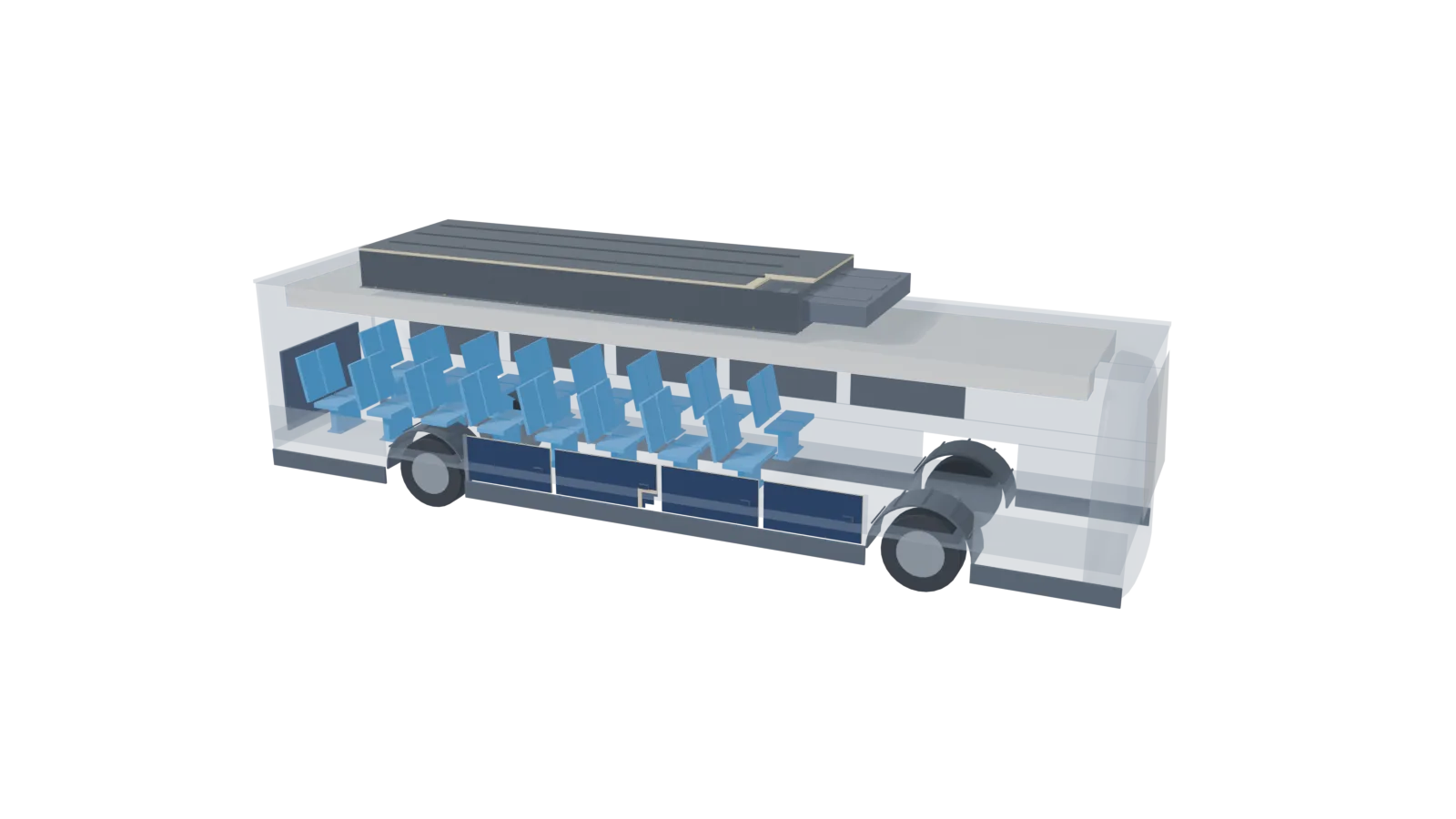
Take a railcar apart and see which material goes into each part

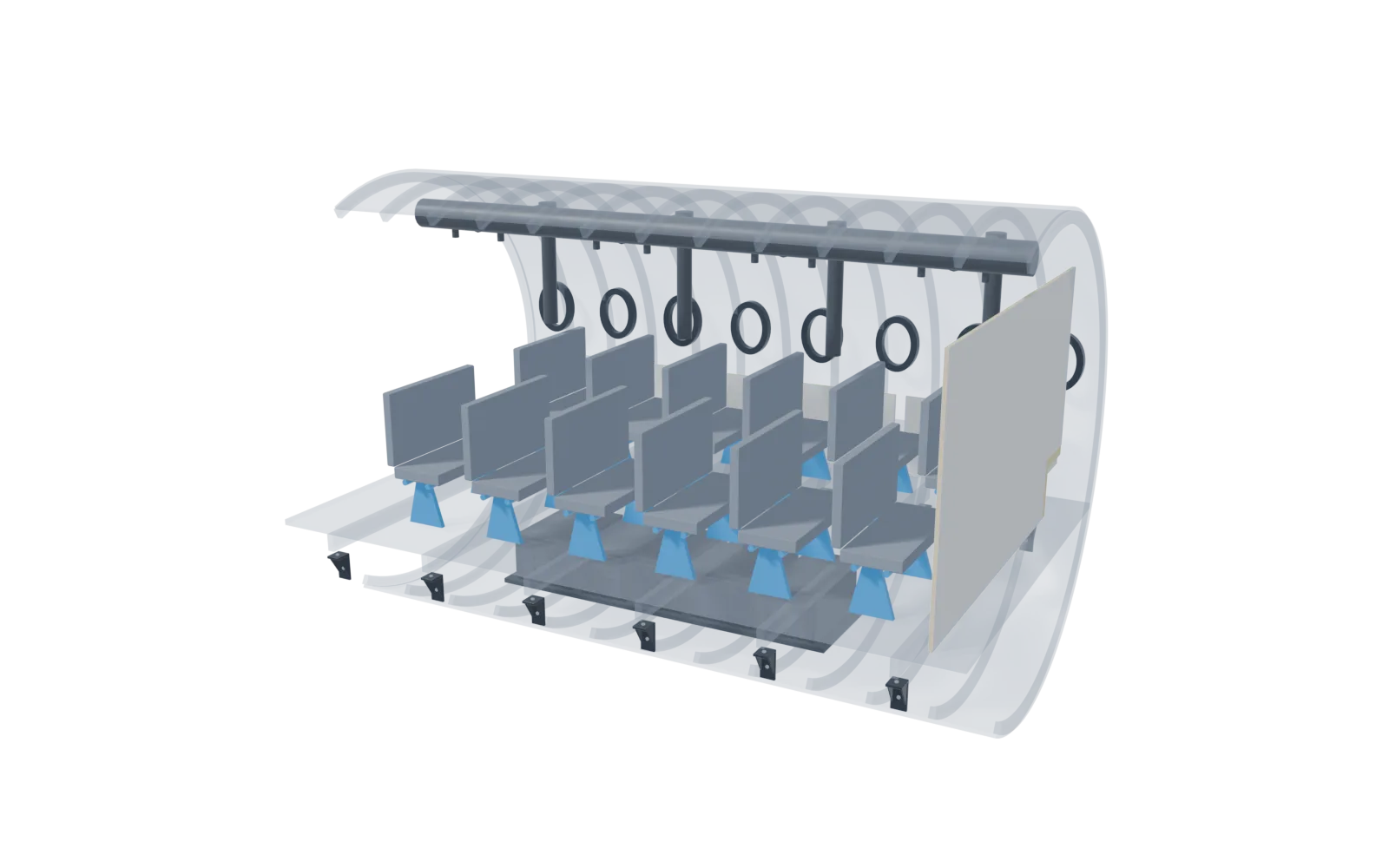
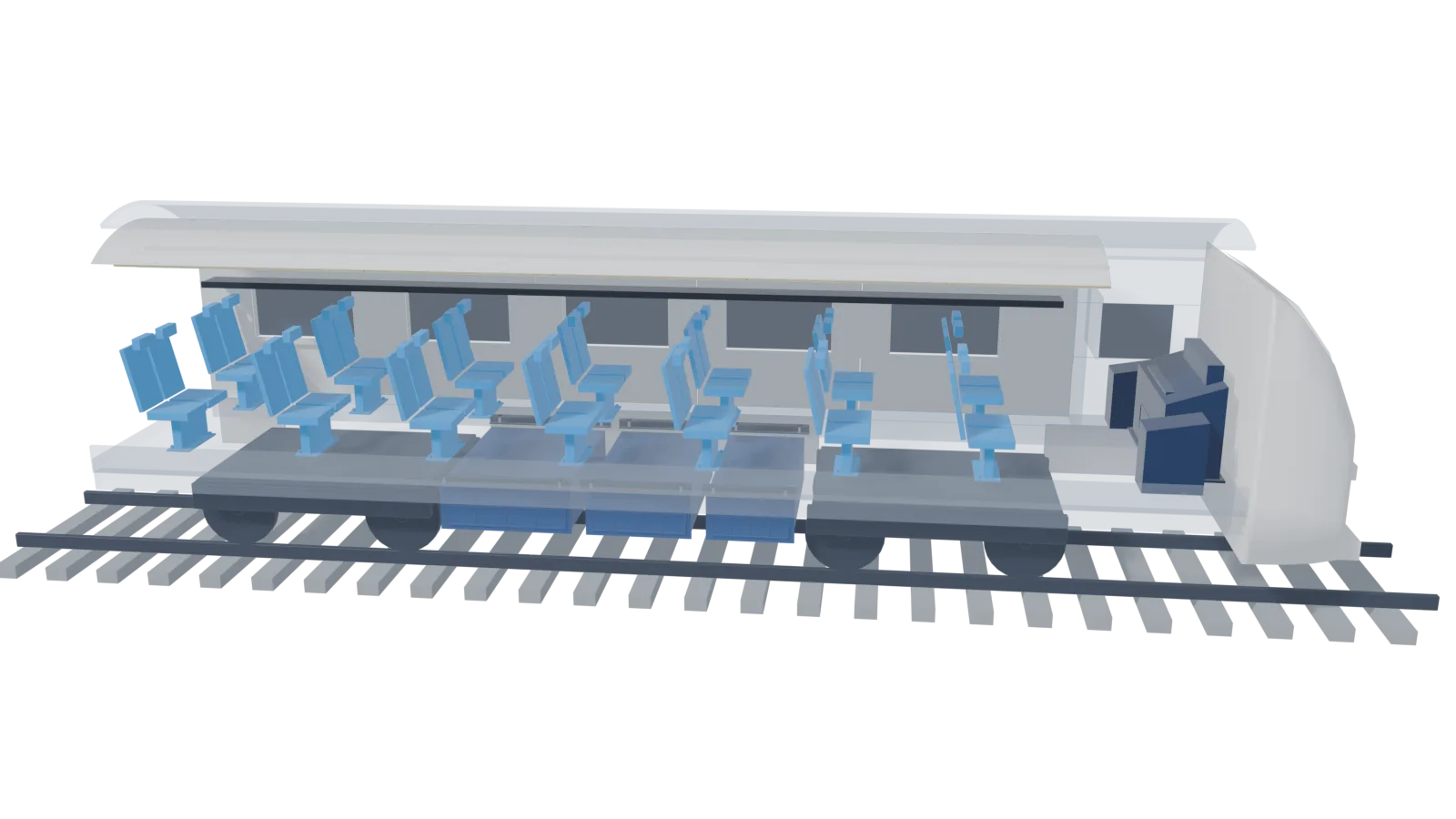
Generic passenger coach in cutaway, with the carbody in translucent grey. Click a part to zoom in and see its engineering sheet: process, fixing, lightweighting, advantages and series.

Render of a generic passenger coach in cutaway, with linings, ceiling, seats, driver desk, brackets, enclosures and front end

Drag to rotate · scroll or pinch to zoom · click a part to zoom in

01

Interior side panels

Location
Saloon walls, with 3D window frame.
Recommended material
Rail SMC HL3 · Structural Phenolic SMC 55% GF
Requirement / key data
EN 45545-2 · R1 up to HL3 (Rail SMC HL3). Alternative Structural Phenolic SMC: HL3, requirement depending on application.
1Part detail and process
Panel with 3D window frame, reveal and sill in a single pressing, rib grid on the back face and bosses with hidden inserts. Typical thickness of 2.5 to 6 mm for moulded parts. 5-axis waterjet trimming (0°–64°) and in-house CNC machining. Finish: technical visible face in the material colour.
2Assembly and fixing to the structure
  • M5–M12 threaded metal inserts, moulded in or installed cold or hot into reinforced bosses.
  • Perimeter overlap flanges to fit the adjacent parts.
3Lightweighting: ribbed monolithic or sandwich
Proposed solution: ribbed monolithic. Thin wall with 3D ribs, bosses and inserts where the loads arrive — right for compact parts or point loads. For large spans, a sandwich panel is assessed.
4Advantages over the traditional alternative
Compared with flat panels assembled with profiles — Rail SMC HL3: classified EN 45545-2 R1, R2, R3, R6, R7 and R17 up to HL3 by an ENAC-accredited laboratory; fewer parts and joints than an assembled solution.
5Series and manufacturing capacity
Typical series (indicative): 50 to 500 pcs/year, typical of rail, aerospace or space programmes. Press: P30 or P7 (6,000 kN, 1,850 × 1,400 and 1,600 × 1,400 mm platens). In-house fleet of 7 presses from 150 to 1,250 t, with a largest platen of 3,500 × 1,800 mm. The steel mould is amortised over the series: the higher the volume, the lower the tooling cost per part; for short runs we compare with other solutions.
Request a study of this part →
02

Curved modular ceiling with HVAC

Location
Saloon ceiling with air channels and diffusers.
Recommended material
Rail SMC HL3 · Structural Phenolic SMC 55% GF
Requirement / key data
EN 45545-2 · R1 up to HL3 (Rail SMC HL3). Alternative Structural Phenolic SMC: HL3, requirement depending on application.
1Part detail and process
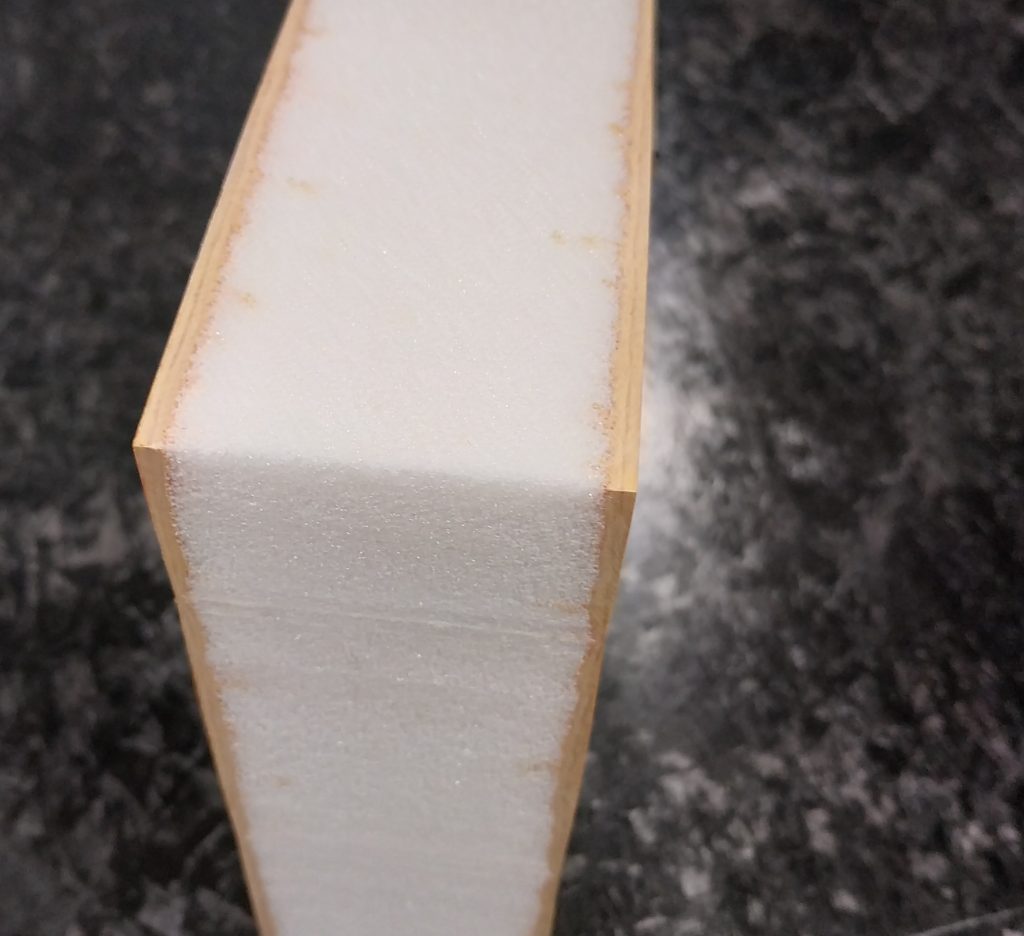
Large curved sandwich module (layers visible at the cut), with integrated HVAC channel and louvred diffusers. Typical thickness of 2.5 to 6 mm for moulded parts. 5-axis waterjet trimming (0°–64°) and in-house CNC machining. Finish: technical visible face in the material colour.
2Assembly and fixing to the structure
  • M5–M12 threaded metal inserts, moulded in or installed cold or hot into reinforced bosses.
  • Perimeter overlap flanges to fit the adjacent parts.
3Lightweighting: ribbed monolithic or sandwich
Proposed solution: sandwich panel. Moulded skins with a lightweight self-extinguishing core, selected for the fire requirement, multiply flexural stiffness over large spans compared with a monolithic panel of the same weight; the actual weight saving is quantified in each part study. Compact parts are solved as ribbed monolithic.
4Advantages over the traditional alternative
Compared with flat panels assembled with profiles — Rail SMC HL3: classified EN 45545-2 R1, R2, R3, R6, R7 and R17 up to HL3 by an ENAC-accredited laboratory; fewer parts and joints than an assembled solution.
5Series and manufacturing capacity
Typical series (indicative): 50 to 500 pcs/year, typical of rail, aerospace or space programmes. Press: P10 (1,250 t, 3,500 × 1,800 mm platen) or P8 (10,000 kN, 2,800 × 1,800 mm). In-house fleet of 7 presses from 150 to 1,250 t, with a largest platen of 3,500 × 1,800 mm. The steel mould is amortised over the series: the higher the volume, the lower the tooling cost per part; for short runs we compare with other solutions.
Request a study of this part →
03

Load-bearing seat shells

Location
Backrest, seat and pedestal of each seat.
Recommended material
Rail SMC HL3
Requirement / key data
EN 45545-2 · R6 up to HL3 (Rail SMC HL3).
1Part detail and process
Vandal-resistant shell with rear rib grid, headrest and bosses with metal inserts for fixing to the pedestal. Typical thickness of 2.5 to 6 mm for moulded parts. 5-axis waterjet trimming (0°–64°) and in-house CNC machining. Finish: technical visible face in the material colour.
2Assembly and fixing to the structure
  • M5–M12 threaded metal inserts, moulded in or installed cold or hot into reinforced bosses.
  • Metal torque-limiting bushings in through holes, so tightening does not cause composite creep under vibration.
3Lightweighting: ribbed monolithic or sandwich
Proposed solution: ribbed monolithic. Thin wall with 3D ribs, bosses and inserts where the loads arrive — right for compact parts or point loads. For large spans, a sandwich panel is assessed.
4Advantages over the traditional alternative
Compared with cut, welded and painted steel sheet — Rail SMC HL3: classified EN 45545-2 R1, R2, R3, R6, R7 and R17 up to HL3 by an ENAC-accredited laboratory; fewer parts and joints than an assembled solution.
5Series and manufacturing capacity
Typical series (indicative): 50 to 500 pcs/year, typical of rail, aerospace or space programmes. Press: P22 or P20 (4,000 and 2,500 kN, 1,000 × 1,000 and 800 × 800 mm platens). In-house fleet of 7 presses from 150 to 1,250 t, with a largest platen of 3,500 × 1,800 mm. The steel mould is amortised over the series: the higher the volume, the lower the tooling cost per part; for short runs we compare with other solutions.
Request a study of this part →
04

Driver’s desk

Location
Driving console with side modules.
Recommended material
SMC + PIMC in-mould painting, Class A
Requirement / key data
EN 45545-2 depending on its position in the cab: defined for each project.
1Part detail and process
One-piece ergonomic desk with control recess, instrument hood, ventilation grille and fixing flange with inserts. Typical thickness of 2.5 to 6 mm for moulded parts. 5-axis waterjet trimming (0°–64°) and in-house CNC machining. Finish: PIMC in-mould painting, Class A.
2Assembly and fixing to the structure
  • M5–M12 threaded metal inserts, moulded in or installed cold or hot into reinforced bosses.
  • Perimeter overlap flanges to fit the adjacent parts.
3Lightweighting: ribbed monolithic or sandwich
Proposed solution: ribbed monolithic. Thin wall with 3D ribs, bosses and inserts where the loads arrive — right for compact parts or point loads. For large spans, a sandwich panel is assessed.
4Advantages over the traditional alternative
Compared with cut, welded and painted steel sheet — SMC with PIMC in-mould painting: Class A finish straight from the press, with no paint booth afterwards and no corrosion.
5Series and manufacturing capacity
Typical series (indicative): 50 to 500 pcs/year, typical of rail, aerospace or space programmes. Press: P30 or P7 (6,000 kN, 1,850 × 1,400 and 1,600 × 1,400 mm platens). In-house fleet of 7 presses from 150 to 1,250 t, with a largest platen of 3,500 × 1,800 mm. The steel mould is amortised over the series: the higher the volume, the lower the tooling cost per part; for short runs we compare with other solutions.
Request a study of this part →
05

Equipment beams and brackets

Location
Underfloor frames and luggage rack brackets.
Recommended material
CSMC Carbon 57%
Requirement / key data
Secondary structure. The CSMC datasheet includes no EN 45545-2 classification: in areas with a fire requirement it is validated in the study.
1Part detail and process
I-beams and brackets with web and flanges moulded in one go, with compression bushings and galvanic insulation washers at each support. Typical thickness of 2.5 to 6 mm for moulded parts. 5-axis waterjet trimming (0°–64°) and in-house CNC machining. Finish: technical visible face with controlled roughness in bonding areas.
2Assembly and fixing to the structure
  • Metal torque-limiting bushings in through holes, so tightening does not cause composite creep under vibration.
  • Galvanic couple insulation (insulating washers and gaskets) where the carbon part is fixed onto aluminium.
  • M5–M12 threaded metal inserts, moulded in or installed cold or hot into reinforced bosses.
3Lightweighting: ribbed monolithic or sandwich
Proposed solution: ribbed monolithic. Thin wall with 3D ribs, bosses and inserts where the loads arrive — right for compact parts or point loads. For large spans, a sandwich panel is assessed.
4Advantages over the traditional alternative
Compared with machined or cast aluminium — CSMC Carbon 57%: 1.51 g/cm³ vs 2.70 for aluminium (−44% at equal volume), tensile 370 MPa, modulus 41.5 GPa and +113% specific strength (245 vs 115 MPa·cm³/g).
5Series and manufacturing capacity
Typical series (indicative): 50 to 500 pcs/year, typical of rail, aerospace or space programmes. Press: P22 or P20 (4,000 and 2,500 kN, 1,000 × 1,000 and 800 × 800 mm platens). In-house fleet of 7 presses from 150 to 1,250 t, with a largest platen of 3,500 × 1,800 mm. The steel mould is amortised over the series: the higher the volume, the lower the tooling cost per part; for short runs we compare with other solutions.
Request a study of this part →
06

Underframe electrical enclosures

Location
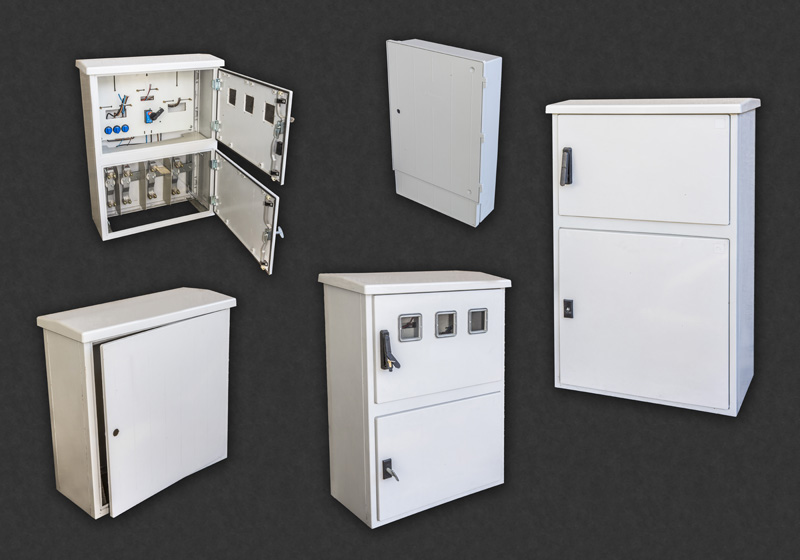
Equipment enclosures and internal insulating plate.
Recommended material
Electrical SMC V-0 / CTI 600
Requirement / key data
UL 94 V-0 (3 mm) · glow wire 960 °C · CTI 600 · 16 kV/mm. EN 45545-2 depending on location: confirmed for each project.
1Part detail and process
Enclosure with ribbed lid, labyrinth sealing lip, ventilation grille and inserts at the lid corners. Typical thickness of 2.5 to 6 mm for moulded parts. 5-axis waterjet trimming (0°–64°) and in-house CNC machining. Finish: technical visible face in the material colour.
2Assembly and fixing to the structure
  • M5–M12 threaded metal inserts, moulded in or installed cold or hot into reinforced bosses.
  • Perimeter lip or channel for a sealing elastomer gasket.
  • Hinge and lock seats moulded with their inserts, with no welded reinforcements.
3Lightweighting: ribbed monolithic or sandwich
Proposed solution: ribbed monolithic. Thin wall with 3D ribs, bosses and inserts where the loads arrive — right for compact parts or point loads. For large spans, a sandwich panel is assessed.
4Advantages over the traditional alternative
Compared with cut, welded and painted steel sheet — Electrical SMC V-0 / CTI 600: 16 kV/mm, CTI 600, glow wire 960 °C, HDT > 250 °C, dielectric constant 4 and UL 94 V-0 at 3 mm. Corrosion-free, weld-free and inherently insulating.
5Series and manufacturing capacity
Typical series (indicative): 50 to 500 pcs/year, typical of rail, aerospace or space programmes. Press: P30 or P7 (6,000 kN, 1,850 × 1,400 and 1,600 × 1,400 mm platens). In-house fleet of 7 presses from 150 to 1,250 t, with a largest platen of 3,500 × 1,800 mm. The steel mould is amortised over the series: the higher the volume, the lower the tooling cost per part; for short runs we compare with other solutions.
Request a study of this part →
07

Aerodynamic front end and skirts

Location
Front fairing and large-format skirts.
Recommended material
Structural Phenolic SMC 55% GF
Requirement / key data
Structural Phenolic SMC: UL 94 V-0 @ 1.2 mm and LOI > 100%. Where the specification requires R7 (exterior), Rail SMC HL3 covers it.
1Part detail and process
Large front end with louvred air intake and headlight seats, and skirts with rear ribs and inserts; moulded on the 1,250 t press. Typical thickness of 2.5 to 6 mm for moulded parts. 5-axis waterjet trimming (0°–64°) and in-house CNC machining. Finish: technical visible face in the material colour.
2Assembly and fixing to the structure
  • M5–M12 threaded metal inserts, moulded in or installed cold or hot into reinforced bosses.
  • Perimeter overlap flanges to fit the adjacent parts.
  • Metal torque-limiting bushings in through holes, so tightening does not cause composite creep under vibration.
3Lightweighting: ribbed monolithic or sandwich
Proposed solution: ribbed monolithic. Thin wall with 3D ribs, bosses and inserts where the loads arrive — right for compact parts or point loads. For large spans, a sandwich panel is assessed.
4Advantages over the traditional alternative
Compared with flat panels assembled with profiles — Structural Phenolic SMC 55% GF: 1.84 g/cm³, flexural 350 MPa, Charpy 120 kJ/m², UL 94 V-0 at 1.2 mm, LOI > 100% and 0.00% moulding shrinkage (indicative datasheet values). A single 3D part with no bolted joints.
5Series and manufacturing capacity
Typical series (indicative): 50 to 500 pcs/year, typical of rail, aerospace or space programmes. Press: P10 (1,250 t, 3,500 × 1,800 mm platen) or P8 (10,000 kN, 2,800 × 1,800 mm). In-house fleet of 7 presses from 150 to 1,250 t, with a largest platen of 3,500 × 1,800 mm. The steel mould is amortised over the series: the higher the volume, the lower the tooling cost per part; for short runs we compare with other solutions.
Request a study of this part →

Generic, illustrative model: it does not represent any real vehicle. Indicative recommendations: the final choice depends on the R requirement, HL level and thickness of each project. EN 45545-2 classifications apply to the tested material and are not a type approval of the part.

Infrastructure

Centralized facilities for continuous large-format flow.

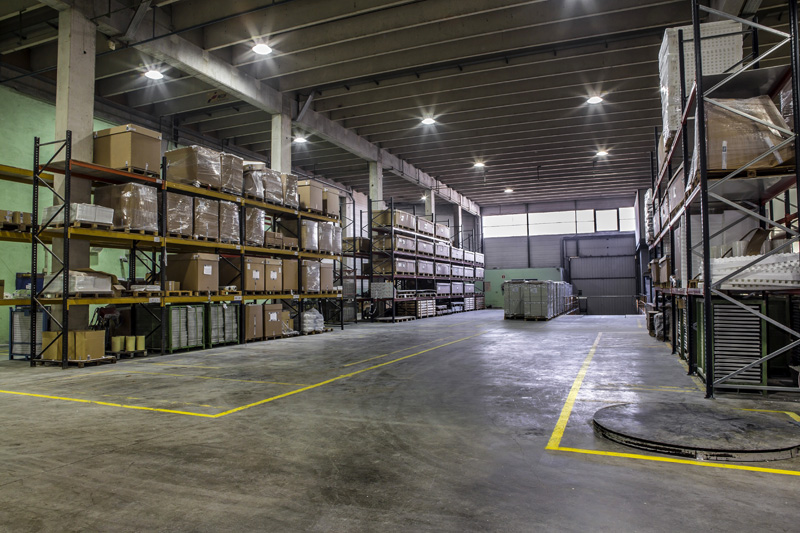
Single plant in Arrigorriaga, designed for handling large-format components and agile international shipping — 20 min from Bilbao Airport and 25 min from the Port of Bilbao.

Composites Martiartu warehouse and logistics building
5.500 m²
Industrial floor area
+1.000
Packing capacity
  • Dedicated mold warehouse for maximum protection and tooling lifespan.
  • Capacity for molds up to 24 tonnes.
  • High-capacity overhead cranes (2×10T, 1×5T) and 2 fast-loading docks.
✈ 20 min from Bilbao Airport ⚓ 25 min from the Port of Bilbao

View full capability →

Press fleet

Massive infrastructure for high structural density.

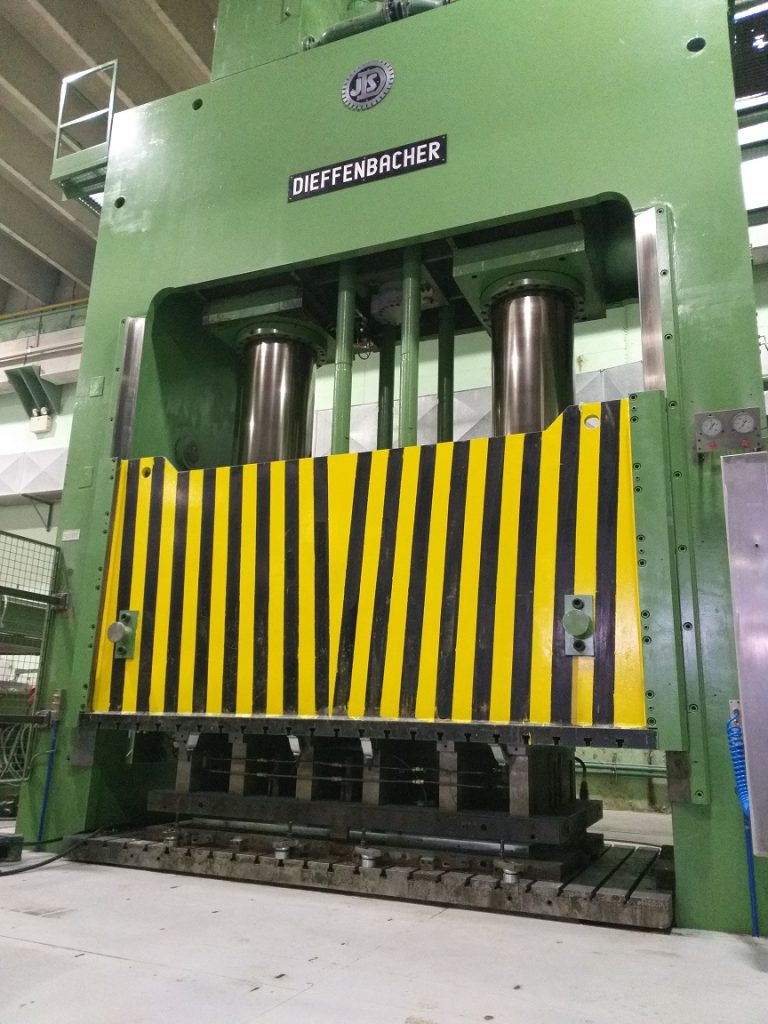
1,250 t Dieffenbacher compression press
Crown Jewel
1.250 Tn
P10 // Platen: 3500 × 1800 mm
PrensaRated forcePlaten dimensions
P1012.500 KN3500 × 1800 mm
P810.000 KN2800 × 1800 mm
P306.000 KN1850 × 1400 mm
P76.000 KN1600 × 1400 mm
P224.000 KN1000 × 1000 mm
P202.500 KN800 × 800 mm
P41.500 KN450 × 900 mm
Series production for manufacturers

Capacity for the series of electrical equipment and rolling stock manufacturers.

When volume drives the project, what matters is output rate, part-to-part repeatability and parts that arrive ready to fit.

7 presses from 150 to 1,250 t, moulds up to 24 t, unit traceability and shipping 25 min from the Port of Bilbao.

Plan a series →
Plant map

Explore our 5,500 m² plant by zone.

Illustrative diagram of the plant layout — not a scaled architectural drawing. Click each zone to see the real photo and specifications.

Precision finishing

From mold to finished part, with no external intermediaries.

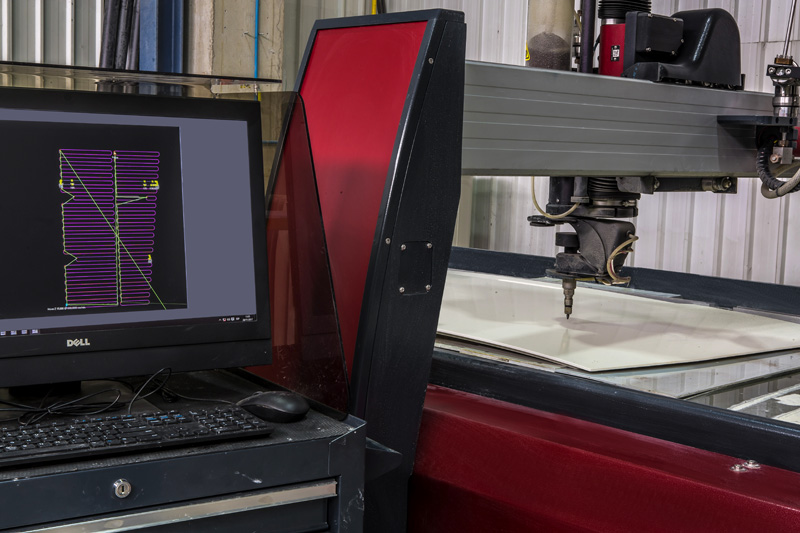
5-axis waterjet cutting head

〰 5-axis water jet cutting

0°–64°

2 máquinas propias. Corte sin deformación térmica hasta 200mm. Dimensiones útiles de trabajo hasta 4000×2000mm.

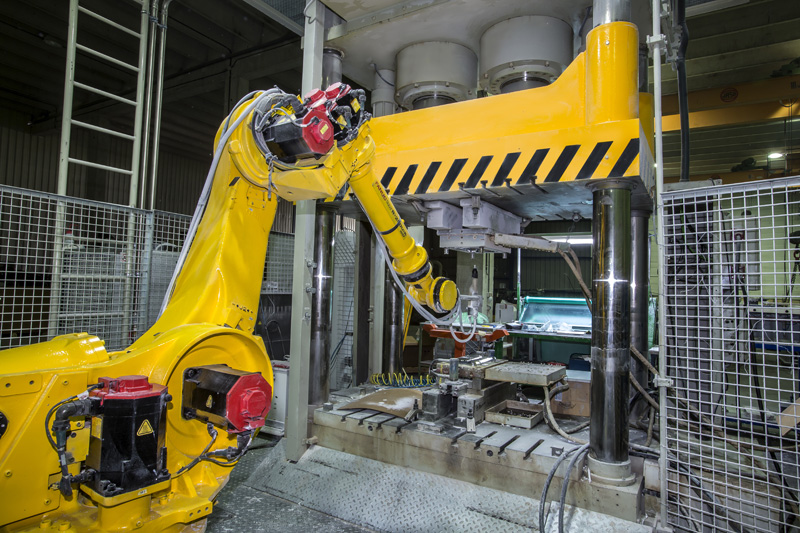
In-mould painting robot (PIMC)

◐ PIMC painting

Robotic in-mold painting for direct Class A finish, with full control of color and coat thickness.

CNC machining centre

⚙ CNC machining

In-house workshop with 4 high-speed machining centers, dedicated to facing, drilling, calibrating and dimensional finishing.

Estimador de proyecto

From specification to quote in minutes, not days.

Define material, geometría, tolerancias y volumen. Nuestro sistema calcula un rango de precio orientativo al instante; nuestro equipo confirma la viabilidad inicial en menos de 24h laborables, y la oferta técnica completa según la complejidad del proyecto.

1Material — SMC, CSMC, HL3 fire-retardant phenolic
2Dimensions, thickness (up to 35mm) and finish
3Batch volume and lead time
4Upload technical drawing — CAD, STEP, DWG
MaterialCSMC · Carbon
Dimensions1200 × 800 × 6 mm
CertificationEN 45545 HL3
Batch500 pcs
Estimated lead time4–5 weeks
Indicative estimate18.400 – 21.200 €
Smart Factory

Full traceability, real-time monitoring.

Our production lines operate under strict analytical control. Sensor monitoring of critical variables on the presses helps ensure repeatability across long runs.

  • Hot thermosensors: continuous monitoring of temperature and hydraulic pressure curves in the presses.
  • Full unit traceability: strict record linking raw material batch, press and final part.
Smart Factory OEE Monitor
● Online
7
Sensor-equipped presses
Active
Press fleet status
Analytical Cycle Capture
Application sectors

One material, very different regulatory demands.

View all sectors →

Application cases

The kind of projects we solve regularly.

Illustrative examples of the kind of technical and commercial challenge we take on — they don't correspond to a specific identifiable client.

Production capacity

Long runs without compromising lead times

Challenge: a manufacturer with several of its own molds couldn't get its molding supplier to handle long runs at the pace it needed.

Solution: we redistributed production across our press lines by tonnage and cycle time for each mold, freeing up capacity for larger batches.

Result: long runs covered reliably, with predictable lead times.

Part cost

From manual molding to a cost-effective mold

Challenge: a part was being manufactured by manual molding, with high labor costs and low repeatability between units.

Solution: we proposed a cost-contained compression mold, sized for the customer's actual volume.

Result: a reduction of -53% in the unit price of the part.

Material change

Lightweighting via compression molding

Challenge: a part made in another material and process was heavy and penalized logistics and assembly costs.

Solution: redesign for compression molding in SMC/CSMC, adjusting thicknesses and reinforcements for the new material.

Result: a lighter part and a lower final price.

Exclusive capability

In-house mold for large-format sheets.

We are one of the few processors with genuine in-house mold capability, for both large-format sheets and custom sizes, reaching thicknesses of up to 35 mm. Maximum structural solidity, made to measure.

ISO 9001:2015
Quality Assurance
ISO 14001:2015
Environmental Management
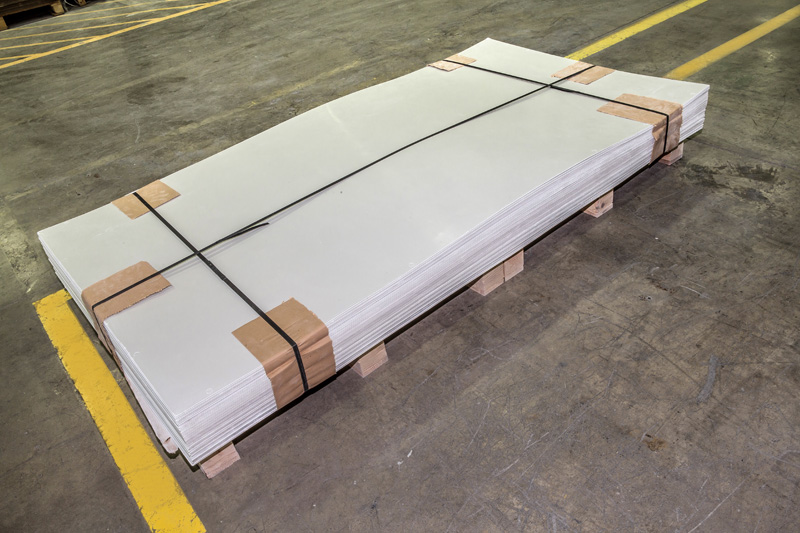
Pallet of packed SMC sheets ready for shipping
Corporate presentation

Get to know Composites Martiartu in detail.

Facilities, press fleet, materials, certifications and sector application cases, in an interactive bilingual presentation. Access on request: we review it and send you the link.

Request access →
Technical shop

SMC sheets to order. Company registration, instant pricing.

Direct purchase of polyester or carbon sheets with cutting and machining to drawing. Once your company is registered, prices are visible. For customization or large quantities, request an RFQ.

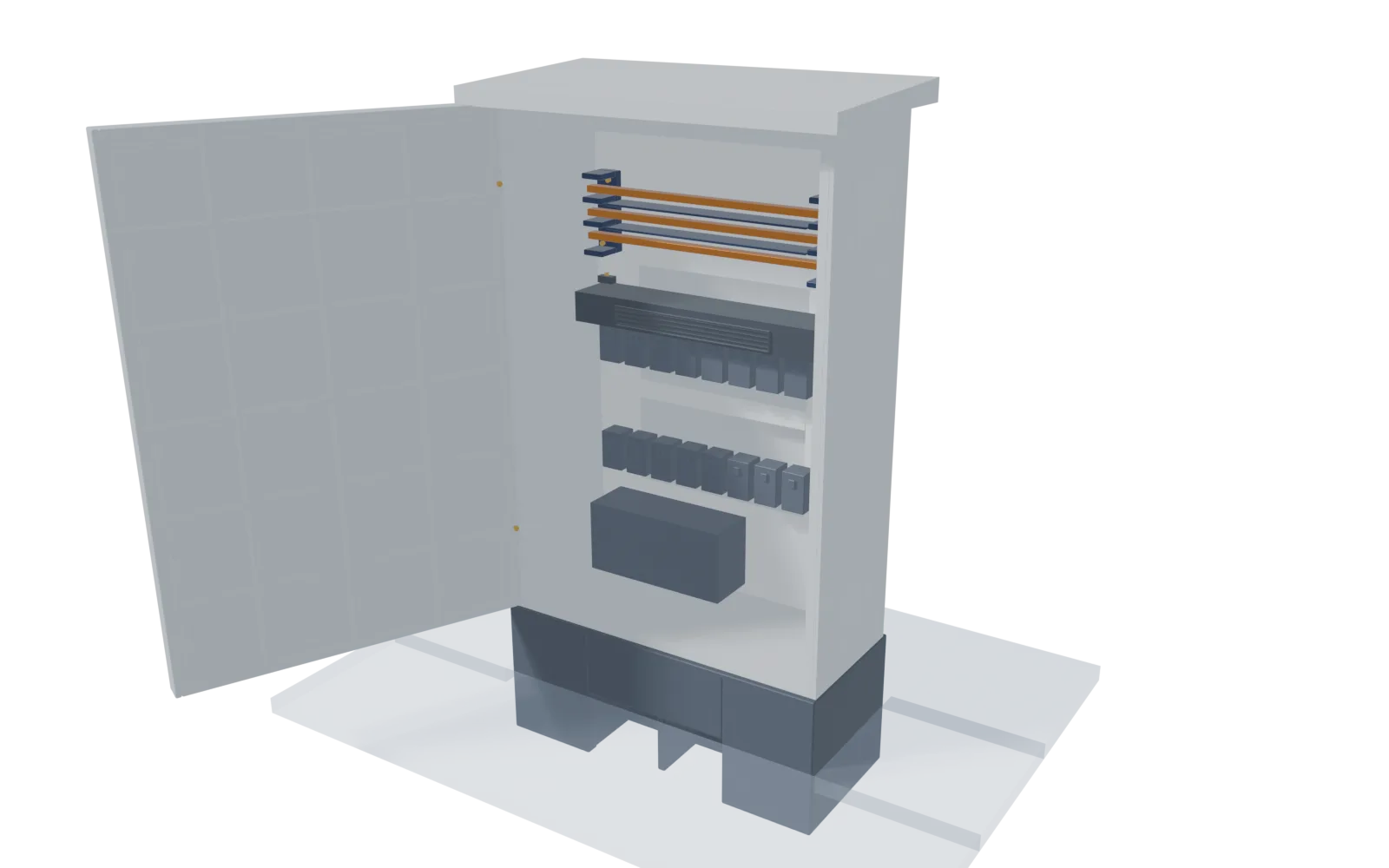
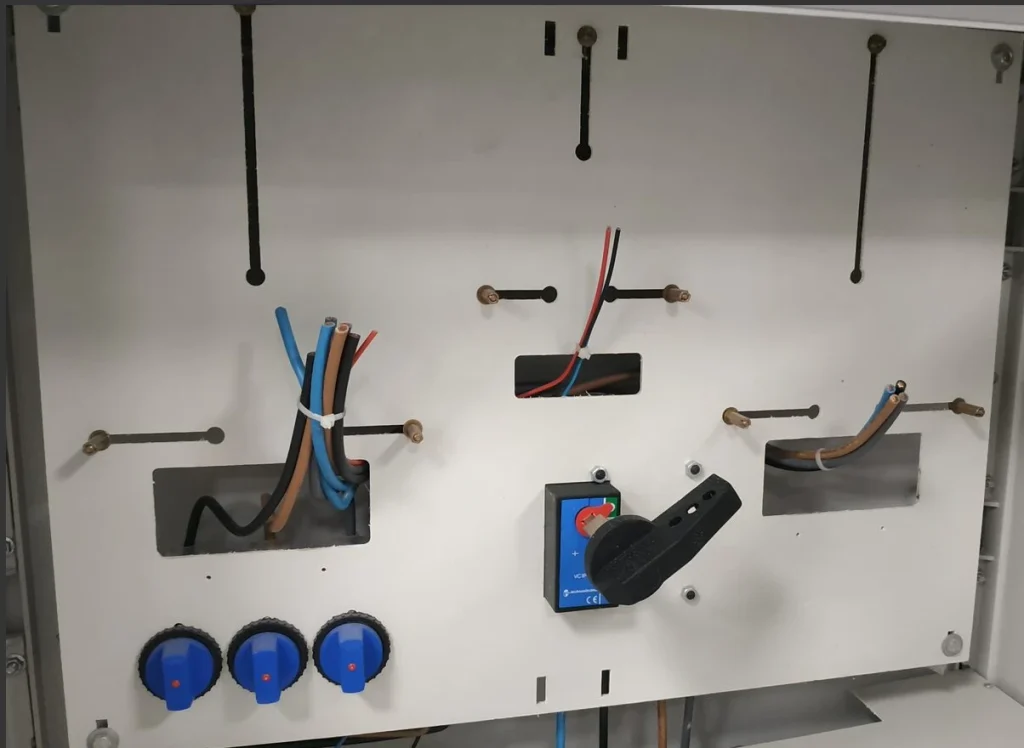
SMC mounting plate inside an electrical switchboard
SMC · 18% glass fiber

Standard mounting sheet

General use, electrical insulation. Thicknesses from 2 to 35mm to order.

Price for registered companiesView options →
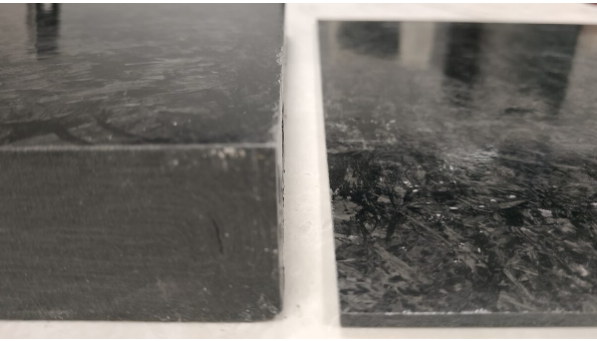
Carbon fibre CSMC sheet
CSMC · Carbon fiber

High-performance carbon sheet

Specific strength 113% higher than 6061-T6 aluminium, according to the material datasheet. Stiffness and lightness for critical applications.

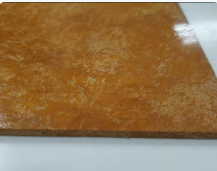
Phenolic SMC sheet
SMC Phenolic · Fire-retardant

Phenolic sheet EN 45545-2 HL3

Meets the applicable EN 45545-2 requirements at HL3 for the certified configuration. Fire behaviour inherent to phenolic resin.

24/7 Technical assistant

Check datasheets and regulations without waiting for an engineer.

The assistant knows material specifications, process tolerances, plant capability and certifications. It replies in seconds and hands off to our technical team when needed.

Every assistant response must be verified with our technical team and the material datasheet before making design or purchasing decisions.

TECHNICAL ASSISTANT · MARTIARTU
Does your phenolic comply with EN 45545 HL3 for train interiors?
Sí — nuestro SMC fenólico cumple los requisitos aplicables de EN 45545-2, categoría HL3, para la configuración certificada. ¿Necesitas la ficha técnica completa o un RFQ para una pieza concreta?
RFQ for a 1200×800×6mm panel, batch of 500.
Perfecto, te abro el estimador de proyecto con estos datos precargados →

Have a drawing and a deadline?

Envíanos tu solicitud de ingeniería. Respondemos con la viabilidad técnica inicial en menos de 24h laborables; la oferta completa depende de la complejidad del proyecto.