● High-performance material · Fire

Phenolic SMC for railway interiors, EN 45545-2 HL3

When a part must meet the most demanding hazard level of the European railway fire standard, phenolic resin chemistry starts with an advantage. And with compression moulding, that part can be three-dimensional, with ribs and bosses — it does not have to be a flat panel.

Fire-retardant phenolic SMC material
HL3
EN 45545-2 hazard level (certified configuration)
1,250 t
largest press, 3,500 × 1,800 mm platen
V-0 · LOI > 100%
UL 94 at 1.2 mm and ISO 4589-2 oxygen index
ISO 9001
unit traceability: batch, press and part
Why phenolic SMC

Fire safety that comes from the resin itself.

01

Chemistry-based fire behaviour

Phenolic resin tends to char rather than melt or drip, and produces little smoke: its good fire performance does not rely only on added flame-retardant fillers, but on the matrix itself.

02

Designed for EN 45545-2

Our phenolic SMC meets the applicable EN 45545-2 requirements at HL3 for the certified configuration — the level required for vehicles with the most demanding evacuation conditions.

03

3D shapes, not just flat panels

Linings, covers, housings and three-dimensional parts moulded in one go, with thicknesses and ribs tuned to the stiffness you need.

04

Integrated finishing

CNC machining and 5-axis waterjet cutting in-house for holes, trims and dimensional fit, with no third parties involved.

Substitution engineering

Material substitution: same function, better part

Three material changes we solve with compression moulding, with the datasheet values of each grade.

01

Mica → 3D Structural Phenolic SMC

Battery pack shields (electric vehicles, rail), fire barriers and arc chutes.

TodayFlat mica sheets cut and joined with fasteners or adhesives: every joint is a path for hot gases or an arc, the material is brittle under vibration and impact, and assembly adds cost.

With compression mouldingA single three-dimensional part with ribs, sealing labyrinths and integrated fixings. The phenolic matrix tends to char rather than melt or drip.

  • Shrinkage 0.00% (ISO 2577)
  • Charpy 120 kJ/m² (ISO 179)
  • Flexural 350 MPa (ISO 14125)
  • UL 94 V-0 at 1.2 mm
  • LOI > 100% (ISO 4589-2)
Assess my part →
02

Machined or cast aluminium → CSMC Carbon 57%

Brackets, frames, covers and structural parts currently milled from 6061-T6 billet or cast.

TodayAluminium part with many hours of CNC milling or casting tooling, at 2.70 g/cm³.

With compression mouldingRibs and bosses integrated in a single press cycle, with fewer machining operations and more strength per kilo.

  • 1.51 g/cm³ (−44% vs aluminium)
  • Tensile ≥ 370 MPa
  • +113% specific strength
  • 245 vs 115 MPa·cm³/g
Assess my part →
03

Stainless steel or welded sheet → Electrical and Structural SMC

Outdoor or electrically insulating enclosures, cabinets, covers and housings.

TodaySheet metal cut, bent, welded and painted, needing corrosion protection and added insulation.

With compression mouldingRibbed shapes moulded with no welds or bends, corrosion-free with no anti-corrosion coatings, and inherently insulating.

  • 16 kV/mm
  • CTI 600
  • Glow wire 960 °C
  • HDT > 250 °C
  • UL 94 V-0
Assess my part →

Values from the material manufacturer’s datasheet (indicative values for the Structural Phenolic SMC). Documentation available on request. Final part behaviour (fire, arc, sealing, IP/IK) depends on the design and is validated with the tests each project requires.

EN 45545-2

How a material is classified under EN 45545-2

The standard does not "certify" a material in absolute terms: it classifies it against a requirement (R), which depends on the location and function of the part (for example R1 for interior linings or R6 for seats), and a hazard level (HL1–HL3), which depends on the vehicle’s operation and design category.

The tests measure flame spread (ISO 5658-2), heat release (ISO 5660-1), smoke density (ISO 5659-2) and gas toxicity (Annex C of the standard). That is why, for each part, we confirm with the customer the requirement and level their specification calls for.

Technical data

Reference data · Structural Phenolic SMC 55% GF

Characteristic Value Standard
Process Compression moulding, glass-fibre-reinforced phenolic resin —
Glass fibre content 55% (± 2) ISO 1172
Density 1.84 g/cm³ (± 0.05) EN ISO 1183-1
Moulding shrinkage 0.00% (± 0.05) ISO 2577
Flexural strength 350 MPa ISO 14125
Flexural modulus 17,000 MPa ISO 14125
Tensile strength 200 MPa ISO 527-4
Tensile modulus 17,000 MPa ISO 527-4
Charpy impact strength 120 kJ/m² ISO 179
Flame behaviour V-0 @ 1.2 mm UL 94
Oxygen index (LOI) > 100% ISO 4589-2
Specific strength 109 MPa·cm³/g tensile · 190 MPa·cm³/g flexural Value / density
Railway fire standard EN 45545-2 — HL3 hazard level (certified configuration) Requirement (R) depending on application

Indicative values from the material manufacturer’s datasheet. Documentation available on request. Need EN 45545-2 with higher volumes or lower cost? We also work with Rail SMC HL3, classified R1, R2, R3, R6, R7 and R17 up to HL3.

Applications

Where we use it

  • Interior linings: walls, ceilings and partitions.
  • Covers, housings and technical caps inside the car.
  • Three-dimensional parts that are currently made from several assembled flat panels.
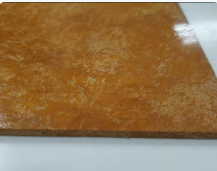
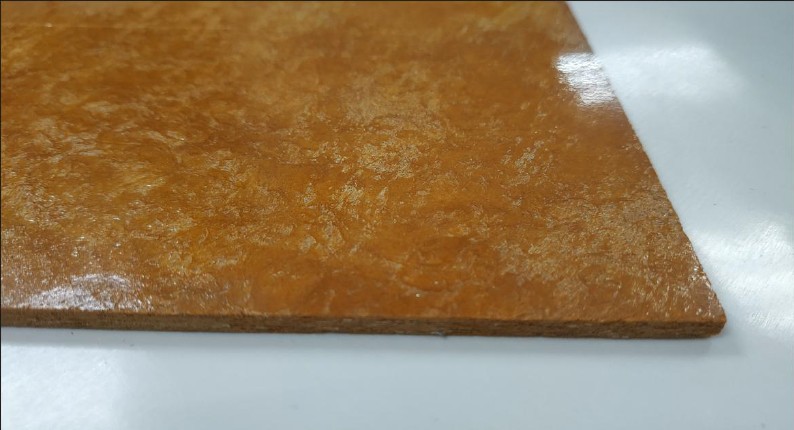
Phenolic SMC sheet
Industrial capacity

From mould to finished part, in a single plant.

7
compression presses, from 150 to 1,250 t
3.500 × 1.800
mm platen on our largest press
24 Tn
moulds up to 24 tonnes, with a dedicated mould store
CNC + 5 ejes
4 CNC centres and 2 in-house waterjet cutting machines
PIMC
in-mould painting for a Class A finish
ISO 9001 · 14001
quality and environment, unit traceability batch–press–part
Frequently asked questions

Common questions about phenolic SMC

What is the difference between phenolic SMC and flame-retardant polyester SMC?

Flame-retardant polyester reaches its fire classification thanks to fillers such as aluminium trihydroxide; in phenolic SMC, fire behaviour comes from the resin itself. Depending on the grade, both can reach HL3 under EN 45545-2: we choose one or the other based on the requirement, weight, volume and cost of the part.

Which hazard level do I need?

It is set by EN 45545-1 from the vehicle’s operation and design category, and is usually fixed in the train manufacturer’s specification. Tell us the level and requirement and we will propose the material.

Can you support us from the design stage?

Yes: in-house engineering with CAD/CAM (SolidWorks, CamWorks) and 3D printing for prototypes, working with the customer’s engineering team from the concept phase.

Does your project require EN 45545-2?

Tell us about the part, its location in the vehicle and the required hazard level: we will propose the material and confirm feasibility.