How much would your metal part weigh in composite?
Enter the current material and weight of the part and the series volume. We give you a first estimate of the weight in CSMC or structural SMC and of the mass saved per year.

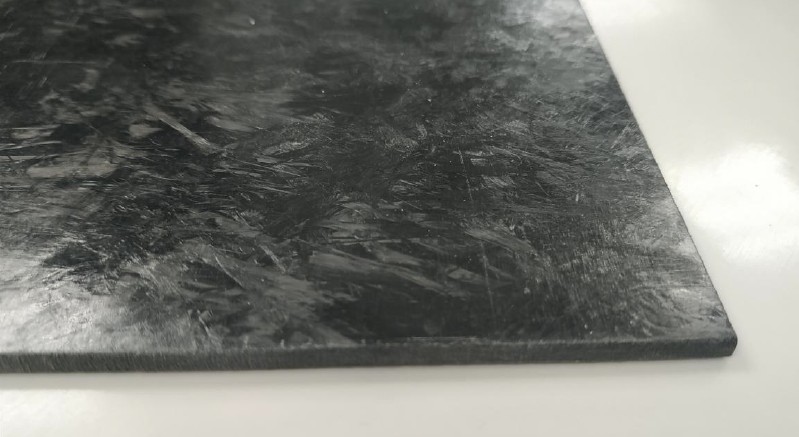
For structural parts made today in aluminium or steel that need to weigh less. CSMC combines carbon fibre with the productivity of compression moulding: complex geometries, ribs and bosses in a single operation, and repeatable series.
Generic fuselage section and wing root, with translucent structure. Click a part to zoom in and see its engineering sheet.
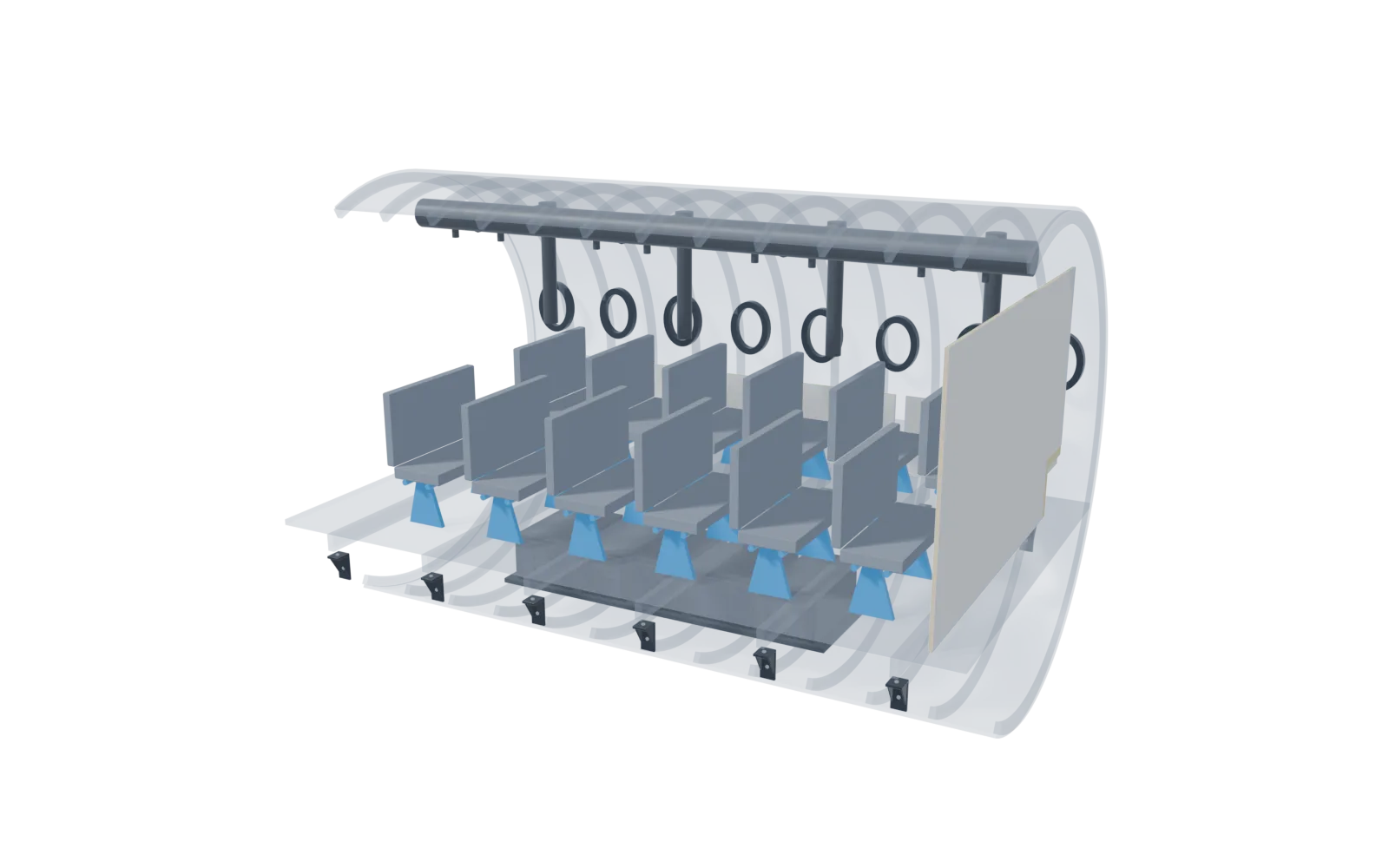
Drag to rotate · scroll or pinch to zoom · click a part to zoom in
Generic, illustrative model: it does not represent any real aircraft. We manufacture under ISO 9001:2015 and ISO 14001:2015 with high-performance materials; we hold no EN 9100 certification and no in-house FAR 25.853 tests. Programme qualification tests (fire, smoke and toxicity, vibration, etc.) are defined and validated with the customer’s engineering team.
At 1.51 g/cm³ versus 2.70 g/cm³ for aluminium, CSMC delivers more than twice the tensile strength per unit of weight. Less mass in the vehicle or equipment, and easier assembly and handling.
Tensile modulus ≥ 41,500 MPa and flexural strength ≥ 420 MPa. Its specific stiffness (modulus/density) is even slightly higher than that of 6061-T6 aluminium.
Compression moulding integrates ribs, reinforcements and bosses into the part itself, reducing joints and operations compared with a machined or welded solution.
As a thermoset composite it does not rust and needs no anti-corrosion treatment. Where it touches aluminium directly, we isolate the joint at design stage to prevent galvanic corrosion.
Moulding, CNC machining and 5-axis waterjet cutting in the same plant, with unit traceability of batch, press and part.
We review your aluminium design and propose thicknesses and ribs for CSMC with our CAD/CAM team (SolidWorks, CamWorks) and 3D printing for prototypes.
Enter the current material and weight of the part and the series volume. We give you a first estimate of the weight in CSMC or structural SMC and of the mass saved per year.
Three material changes we solve with compression moulding, with the datasheet values of each grade.
Battery pack shields (electric vehicles, rail), fire barriers and arc chutes.
TodayFlat mica sheets cut and joined with fasteners or adhesives: every joint is a path for hot gases or an arc, the material is brittle under vibration and impact, and assembly adds cost.
With compression mouldingA single three-dimensional part with ribs, sealing labyrinths and integrated fixings. The phenolic matrix tends to char rather than melt or drip.
Brackets, frames, covers and structural parts currently milled from 6061-T6 billet or cast.
TodayAluminium part with many hours of CNC milling or casting tooling, at 2.70 g/cm³.
With compression mouldingRibs and bosses integrated in a single press cycle, with fewer machining operations and more strength per kilo.
Outdoor or electrically insulating enclosures, cabinets, covers and housings.
TodaySheet metal cut, bent, welded and painted, needing corrosion protection and added insulation.
With compression mouldingRibbed shapes moulded with no welds or bends, corrosion-free with no anti-corrosion coatings, and inherently insulating.
Values from the material manufacturer’s datasheet (indicative values for the Structural Phenolic SMC). Documentation available on request. Final part behaviour (fire, arc, sealing, IP/IK) depends on the design and is validated with the tests each project requires.
| Property | CSMC Carbon 57% | Structural Phenolic SMC 55% GF | 6061-T6 aluminium |
|---|---|---|---|
| Density (g/cm³) | 1.51 | 1.84 | 2.70 |
| Tensile strength (MPa) | ≥ 370 | 200 | 310 |
| Tensile modulus (GPa) | ≥ 41.5 | 17 | 68.9 |
| Flexural strength (MPa) | ≥ 420 | 350 | — |
| Specific tensile strength (MPa·cm³/g) | 245 | 109 | 115 |
| Specific flexural strength (MPa·cm³/g) | 278 | 190 | — |
| Fire (UL 94) | — | V-0 @ 1.2 mm · LOI > 100% | — |
| Reinforcement | 57% carbon fibre | 55% glass fibre | — |
Values from the material manufacturer’s datasheet (tests ISO 527-4, ISO 14125, EN ISO 1183-1, UL 94, ISO 4589-2; indicative values for the phenolic SMC). Documentation available on request. 6061-T6 aluminium: typical values published by ASM / MatWeb. Indicative comparison: actual weight saving depends on each part’s geometry and design criterion (strength or stiffness).
When weight is a design criterion and the part has a complex geometry or is made in series: compression moulding avoids machining and joints, and the material offers more strength per kilo. For very simple parts or very short runs we assess it case by case, with figures.
The drawing or 3D model (STEP), mechanical requirements or loads, expected annual volume and applicable standards. With that we confirm initial feasibility within 24 working hours and propose thicknesses and ribs.
Yes. We work with our own and customer moulds, with a dedicated mould store for tools up to 24 t and their maintenance.
The CSMC datasheet covers mechanical properties. If your application requires EN 45545-2 or another fire standard, we review it for that specific project before proposing the material.
Send us the drawing or 3D model and the annual volume: we reply with initial feasibility within 24 working hours.