Battery pack lid and shield
- Location
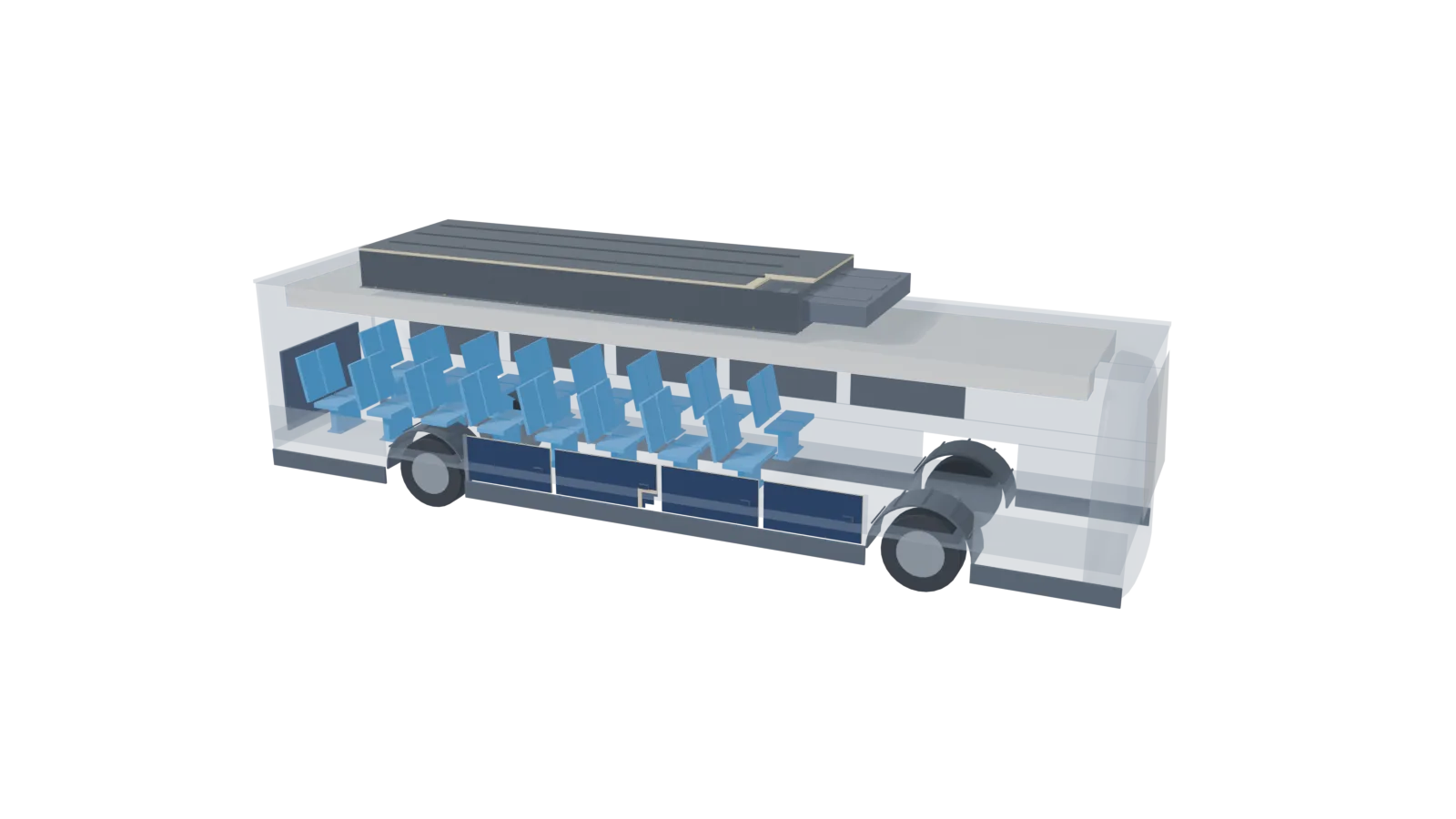
- Fire-barrier cover over the roof modules.
- Recommended material
- Structural Phenolic SMC 55% GF
- Requirement / key data
- LOI > 100% · UL 94 V-0 @ 1.2 mm · flexural 350 MPa. Behaviour in a thermal event is validated for each project.
1Part detail and process
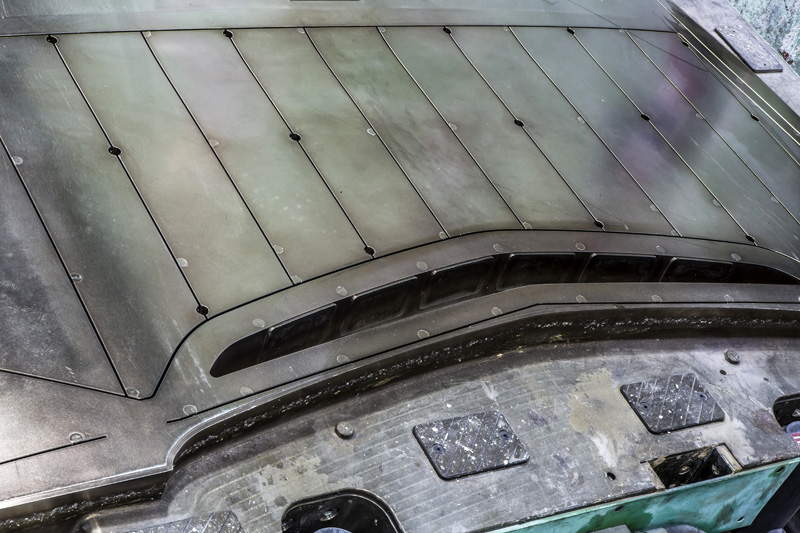
Sandwich lid with sectioned corner, perimeter sealing labyrinth, stiffening ribs and flange with inserts, instead of mica plus sheet metal. Typical thickness of 2.5 to 6 mm for moulded parts. 5-axis waterjet trimming (0°–64°) and in-house CNC machining. Finish: technical visible face in the material colour.
2Assembly and fixing to the structure
- M5–M12 threaded metal inserts, moulded in or installed cold or hot into reinforced bosses.
- Perimeter lip or channel for a sealing elastomer gasket.
- Perimeter overlap flanges to fit the adjacent parts.
3Lightweighting: ribbed monolithic or sandwich
Proposed solution: sandwich panel. Moulded skins with a lightweight self-extinguishing core, selected for the fire requirement, multiply flexural stiffness over large spans compared with a monolithic panel of the same weight; the actual weight saving is quantified in each part study. Compact parts are solved as ribbed monolithic.
4Advantages over the traditional alternative
Compared with assembled flat mica plates — Structural Phenolic SMC 55% GF: 1.84 g/cm³, flexural 350 MPa, Charpy 120 kJ/m², UL 94 V-0 at 1.2 mm, LOI > 100% and 0.00% moulding shrinkage (indicative datasheet values). A single 3D part with no bolted joints.
5Series and manufacturing capacity
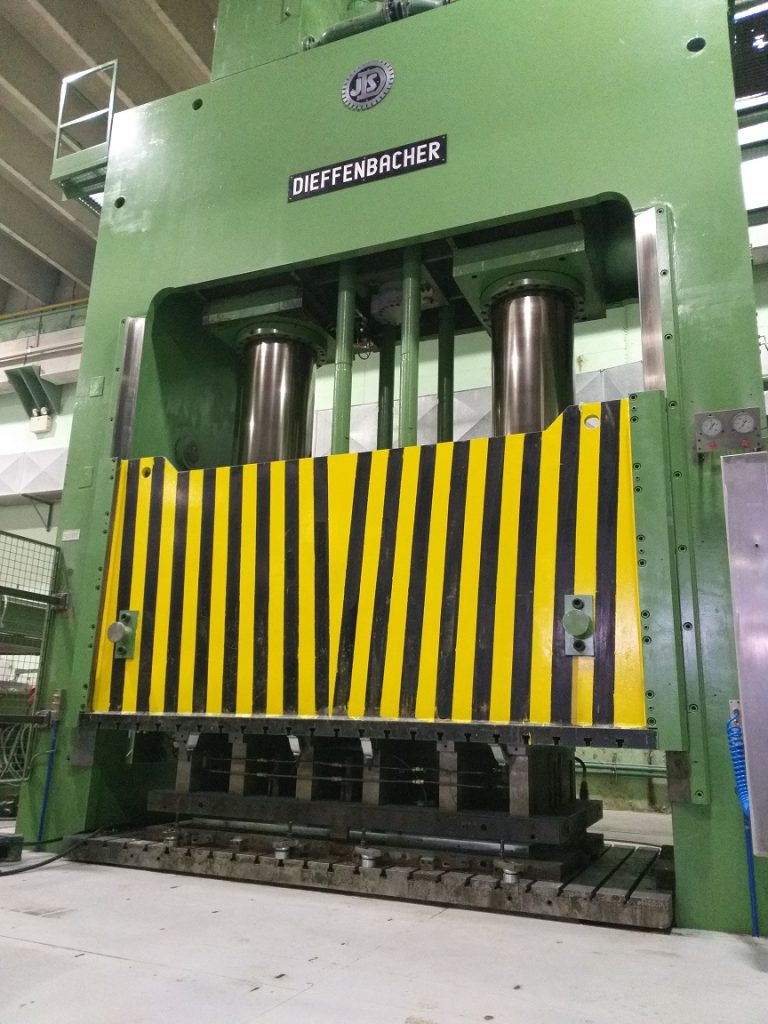
Typical series (indicative): 500 to 20,000+ pcs/year, typical of electrical enclosures and automotive. Press: P10 (1,250 t, 3,500 × 1,800 mm platen) or P8 (10,000 kN, 2,800 × 1,800 mm). In-house fleet of 7 presses from 150 to 1,250 t, with a largest platen of 3,500 × 1,800 mm. The steel mould is amortised over the series: the higher the volume, the lower the tooling cost per part; for short runs we compare with other solutions.