
Automotive

Componentes de automoción — Composites Martiartu

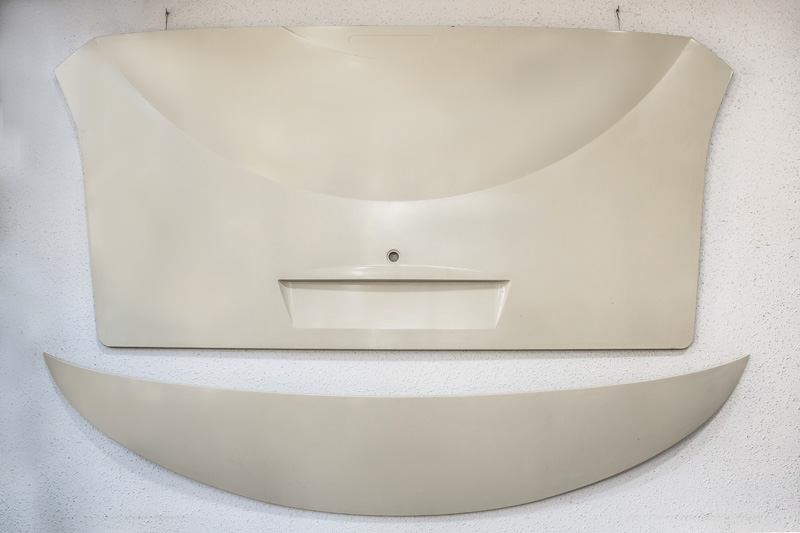
SMC/CSMC compression molding allows manufacturing lightweight structural parts that reduce weight compared to metal without losing mechanical strength, with good corrosion resistance and standard electrical insulation.

Our CSMC carbon fiber achieves a mechanical increase of over 40% compared to aluminum, with a drastic reduction in total part weight.
3D explorer · Electric vehicle

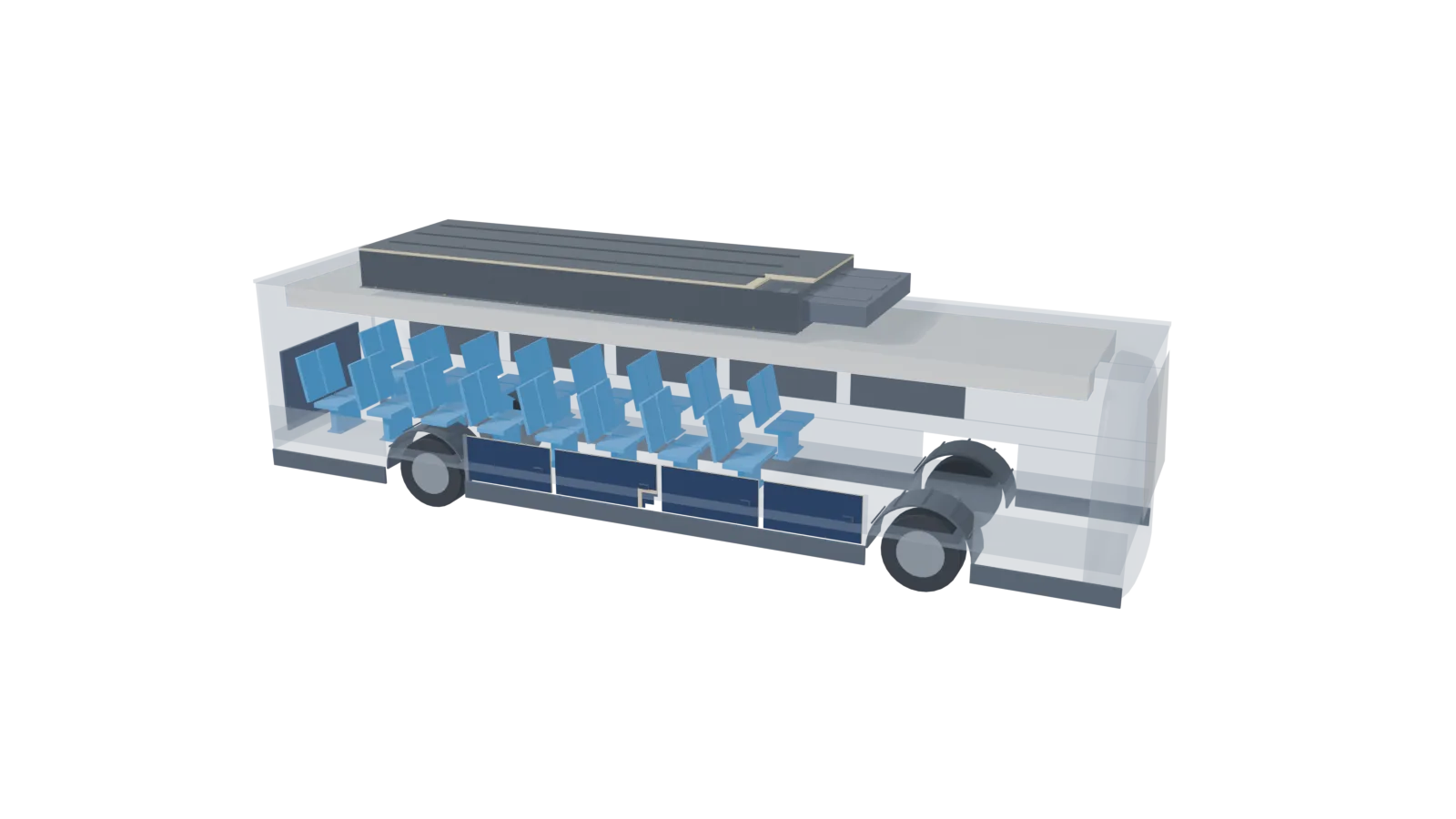
Take an electric bus apart and see which material goes into each part

Generic electric city bus in cutaway, with a translucent body. Click a part to zoom in and see its engineering sheet.

Render of a generic electric bus in cutaway, with battery shield, roof frame, hatches, ducts, seats and wheel arches

Drag to rotate · scroll or pinch to zoom · click a part to zoom in

01

Battery pack lid and shield

Location
Fire-barrier cover over the roof modules.
Recommended material
Structural Phenolic SMC 55% GF
Requirement / key data
LOI > 100% · UL 94 V-0 @ 1.2 mm · flexural 350 MPa. Behaviour in a thermal event is validated for each project.
1Part detail and process
Sandwich lid with sectioned corner, perimeter sealing labyrinth, stiffening ribs and flange with inserts, instead of mica plus sheet metal. Typical thickness of 2.5 to 6 mm for moulded parts. 5-axis waterjet trimming (0°–64°) and in-house CNC machining. Finish: technical visible face in the material colour.
2Assembly and fixing to the structure
  • M5–M12 threaded metal inserts, moulded in or installed cold or hot into reinforced bosses.
  • Perimeter lip or channel for a sealing elastomer gasket.
  • Perimeter overlap flanges to fit the adjacent parts.
3Lightweighting: ribbed monolithic or sandwich
Proposed solution: sandwich panel. Moulded skins with a lightweight self-extinguishing core, selected for the fire requirement, multiply flexural stiffness over large spans compared with a monolithic panel of the same weight; the actual weight saving is quantified in each part study. Compact parts are solved as ribbed monolithic.
4Advantages over the traditional alternative
Compared with assembled flat mica plates — Structural Phenolic SMC 55% GF: 1.84 g/cm³, flexural 350 MPa, Charpy 120 kJ/m², UL 94 V-0 at 1.2 mm, LOI > 100% and 0.00% moulding shrinkage (indicative datasheet values). A single 3D part with no bolted joints.
5Series and manufacturing capacity
Typical series (indicative): 500 to 20,000+ pcs/year, typical of electrical enclosures and automotive. Press: P10 (1,250 t, 3,500 × 1,800 mm platen) or P8 (10,000 kN, 2,800 × 1,800 mm). In-house fleet of 7 presses from 150 to 1,250 t, with a largest platen of 3,500 × 1,800 mm. The steel mould is amortised over the series: the higher the volume, the lower the tooling cost per part; for short runs we compare with other solutions.
Request a study of this part →
02

Roof structural frame

Location
Rails and cross members under the pack.
Recommended material
CSMC Carbon 57%
Requirement / key data
1.51 g/cm³ (−44% vs aluminium) · tensile 370 MPa
1Part detail and process
I-section rails and cross members with torque-limiting bushings and galvanic insulation washers at each support; less mass up high. Typical thickness of 2.5 to 6 mm for moulded parts. 5-axis waterjet trimming (0°–64°) and in-house CNC machining. Finish: technical visible face with controlled roughness in bonding areas.
2Assembly and fixing to the structure
  • Metal torque-limiting bushings in through holes, so tightening does not cause composite creep under vibration.
  • Galvanic couple insulation (insulating washers and gaskets) where the carbon part is fixed onto aluminium.
  • M5–M12 threaded metal inserts, moulded in or installed cold or hot into reinforced bosses.
3Lightweighting: ribbed monolithic or sandwich
Proposed solution: ribbed monolithic. Thin wall with 3D ribs, bosses and inserts where the loads arrive — right for compact parts or point loads. For large spans, a sandwich panel is assessed.
4Advantages over the traditional alternative
Compared with machined or cast aluminium — CSMC Carbon 57%: 1.51 g/cm³ vs 2.70 for aluminium (−44% at equal volume), tensile 370 MPa, modulus 41.5 GPa and +113% specific strength (245 vs 115 MPa·cm³/g).
5Series and manufacturing capacity
Typical series (indicative): 500 to 20,000+ pcs/year, typical of electrical enclosures and automotive. Press: P30 or P7 (6,000 kN, 1,850 × 1,400 and 1,600 × 1,400 mm platens). In-house fleet of 7 presses from 150 to 1,250 t, with a largest platen of 3,500 × 1,800 mm. The steel mould is amortised over the series: the higher the volume, the lower the tooling cost per part; for short runs we compare with other solutions.
Request a study of this part →
03

Exterior luggage hatches

Location
Side hatches and rear service hatch.
Recommended material
SMC + PIMC in-mould painting, Class A
Requirement / key data
Class A finish painted in the mould
1Part detail and process
Sandwich hatch with in-mould painted skin, internal ribs, handle and integrated hinge inserts. Typical thickness of 2.5 to 6 mm for moulded parts. 5-axis waterjet trimming (0°–64°) and in-house CNC machining. Finish: PIMC in-mould painting, Class A.
2Assembly and fixing to the structure
  • Hinge and lock seats moulded with their inserts, with no welded reinforcements.
  • Perimeter lip or channel for a sealing elastomer gasket.
  • M5–M12 threaded metal inserts, moulded in or installed cold or hot into reinforced bosses.
3Lightweighting: ribbed monolithic or sandwich
Proposed solution: sandwich panel. Moulded skins with a lightweight self-extinguishing core, selected for the fire requirement, multiply flexural stiffness over large spans compared with a monolithic panel of the same weight; the actual weight saving is quantified in each part study. Compact parts are solved as ribbed monolithic.
4Advantages over the traditional alternative
Compared with cut, welded and painted steel sheet — SMC with PIMC in-mould painting: Class A finish straight from the press, with no paint booth afterwards and no corrosion.
5Series and manufacturing capacity
Typical series (indicative): 500 to 20,000+ pcs/year, typical of electrical enclosures and automotive. Press: P10 (1,250 t, 3,500 × 1,800 mm platen) or P8 (10,000 kN, 2,800 × 1,800 mm). In-house fleet of 7 presses from 150 to 1,250 t, with a largest platen of 3,500 × 1,800 mm. The steel mould is amortised over the series: the higher the volume, the lower the tooling cost per part; for short runs we compare with other solutions.
Request a study of this part →
04

HVAC ducts and linings

Location
Air channels and ceiling panels.
Recommended material
Rail SMC HL3
Requirement / key data
Classified EN 45545-2 (railway) R1 up to HL3; for buses, the applicable regulation is confirmed for each project.
1Part detail and process
Channels with louvred diffusers and ribbed ceiling panels moulded in one piece, with integrated fixings. Typical thickness of 2.5 to 6 mm for moulded parts. 5-axis waterjet trimming (0°–64°) and in-house CNC machining. Finish: technical visible face in the material colour.
2Assembly and fixing to the structure
  • M5–M12 threaded metal inserts, moulded in or installed cold or hot into reinforced bosses.
  • Perimeter overlap flanges to fit the adjacent parts.
3Lightweighting: ribbed monolithic or sandwich
Proposed solution: ribbed monolithic. Thin wall with 3D ribs, bosses and inserts where the loads arrive — right for compact parts or point loads. For large spans, a sandwich panel is assessed.
4Advantages over the traditional alternative
Compared with flat panels assembled with profiles — Rail SMC HL3: classified EN 45545-2 R1, R2, R3, R6, R7 and R17 up to HL3 by an ENAC-accredited laboratory; fewer parts and joints than an assembled solution.
5Series and manufacturing capacity
Typical series (indicative): 500 to 20,000+ pcs/year, typical of electrical enclosures and automotive. Press: P30 or P7 (6,000 kN, 1,850 × 1,400 and 1,600 × 1,400 mm platens). In-house fleet of 7 presses from 150 to 1,250 t, with a largest platen of 3,500 × 1,800 mm. The steel mould is amortised over the series: the higher the volume, the lower the tooling cost per part; for short runs we compare with other solutions.
Request a study of this part →
05

Rear seat structure

Location
Backrest, seat and pedestal.
Recommended material
Structural Phenolic SMC 55% GF
Requirement / key data
Charpy 120 kJ/m² · flexural 350 MPa · UL 94 V-0 @ 1.2 mm
1Part detail and process
Lightweight shell with rear rib grid and bosses with inserts in the pedestal, impact-resistant and easy to clean. Typical thickness of 2.5 to 6 mm for moulded parts. 5-axis waterjet trimming (0°–64°) and in-house CNC machining. Finish: technical visible face in the material colour.
2Assembly and fixing to the structure
  • M5–M12 threaded metal inserts, moulded in or installed cold or hot into reinforced bosses.
  • Metal torque-limiting bushings in through holes, so tightening does not cause composite creep under vibration.
3Lightweighting: ribbed monolithic or sandwich
Proposed solution: ribbed monolithic. Thin wall with 3D ribs, bosses and inserts where the loads arrive — right for compact parts or point loads. For large spans, a sandwich panel is assessed.
4Advantages over the traditional alternative
Compared with cut, welded and painted steel sheet — Structural Phenolic SMC 55% GF: 1.84 g/cm³, flexural 350 MPa, Charpy 120 kJ/m², UL 94 V-0 at 1.2 mm, LOI > 100% and 0.00% moulding shrinkage (indicative datasheet values). A single 3D part with no bolted joints.
5Series and manufacturing capacity
Typical series (indicative): 500 to 20,000+ pcs/year, typical of electrical enclosures and automotive. Press: P22 or P20 (4,000 and 2,500 kN, 1,000 × 1,000 and 800 × 800 mm platens). In-house fleet of 7 presses from 150 to 1,250 t, with a largest platen of 3,500 × 1,800 mm. The steel mould is amortised over the series: the higher the volume, the lower the tooling cost per part; for short runs we compare with other solutions.
Request a study of this part →
06

Wheel arches and skirts

Location
Wheel arches and lower skirts.
Recommended material
Structural SMC 55% GF
Requirement / key data
Self-extinguishing structural grade; datasheet values on request.
1Part detail and process
Curved wheel arches with reinforcing ribs and skirts with rear ribs, corrosion-free against salt and gravel. Typical thickness of 2.5 to 6 mm for moulded parts. 5-axis waterjet trimming (0°–64°) and in-house CNC machining. Finish: technical visible face in the material colour.
2Assembly and fixing to the structure
  • M5–M12 threaded metal inserts, moulded in or installed cold or hot into reinforced bosses.
  • Perimeter overlap flanges to fit the adjacent parts.
3Lightweighting: ribbed monolithic or sandwich
Proposed solution: ribbed monolithic. Thin wall with 3D ribs, bosses and inserts where the loads arrive — right for compact parts or point loads. For large spans, a sandwich panel is assessed.
4Advantages over the traditional alternative
Compared with cut, welded and painted steel sheet — Structural SMC (40–55% GF): self-extinguishing grades, corrosion-free against water and salt, curved shapes in one piece; datasheet values on request.
5Series and manufacturing capacity
Typical series (indicative): 500 to 20,000+ pcs/year, typical of electrical enclosures and automotive. Press: P30 or P7 (6,000 kN, 1,850 × 1,400 and 1,600 × 1,400 mm platens). In-house fleet of 7 presses from 150 to 1,250 t, with a largest platen of 3,500 × 1,800 mm. The steel mould is amortised over the series: the higher the volume, the lower the tooling cost per part; for short runs we compare with other solutions.
Request a study of this part →

Generic, illustrative model: it does not represent any real vehicle or manufacturer. Values from the material manufacturer’s datasheet (indicative for the Structural Phenolic SMC); documentation available on request. Fire regulations for buses differ from the EN 45545-2 railway standard and are confirmed for each project, as is the shield’s behaviour in a battery thermal event.